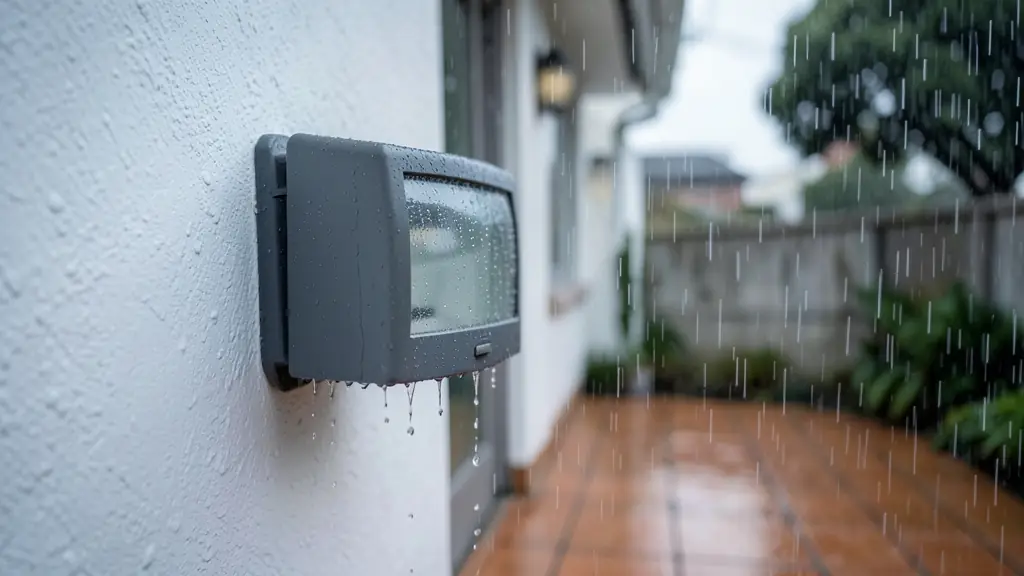
Almost every box says waterproof, and almost every light that comes back to the counter has water in it. For solar lights outdoor waterproof means an IP rating that matches where the light lives, and seals that last more than one season of sun. A light on a covered stoep needs far less than one on a Hermanus boundary wall in the salt spray, a bollard in a sprinkler line, or a step light that sits in a puddle every time it storms in Johannesburg.
IP numbers in plain words
The first digit is dust, the second is water. For outdoor solar lights the second digit is the one to read.
- IP44: splashes. Fine under an eave or on a covered patio.
- IP65: rain from any angle and a garden hose. The usual minimum for a wall or garden light in the open.
- IP66: heavy rain and strong jets. Good for floods and street heads in exposed spots.
- IP67: brief submersion, about half an hour under 1 m. For lights in low beds, driveways and places that flood.
- IP68: continuous submersion, to a depth the maker states. For anything in a pond or pool.
What lets the water in first
- The battery hatch: a thin rubber ring that dries out, cracks or gets pinched when you change the cell.
- The cable gland: where the lead leaves a split panel or string. Cheap glands loosen in the sun and wick water inside.
- The panel lamination: the clear layer over the cells clouds, lifts at the edges and lets moisture under.
- The switch: a soft button cover that splits after a summer of UV.
A rating on the box was tested on a new light. What matters is whether those seals still hold in year three.
Hail on the Highveld, salt at the coast
A November hailstorm in Pretoria or Bethlehem cracks thin plastic panels and the dome on a garden stake light. Toughened glass over the panel and a metal or thick polycarbonate body survive far better. At the coast, from Gqeberha to Ballito, salt air corrodes cheap screws, springs and battery contacts within a year, even when the housing keeps rain out. Ask for stainless screws, sealed contacts and a powder coated or marine grade aluminium body. For poles near the sea, see solar street lights.
Test one before you buy forty
Buying for a complex, a guesthouse or a farm? Order one or two first. Leave a light under the garden sprinkler for a week, hose it from every side, then open the battery hatch and look for fog or drops. If not, you have lost one light, not a pallet. Then check the battery inside on the solar light batteries page.
What to put in your request
- Where each light goes: wall, bed, pond
- Whether the site is near the sea
- IP rating you need, or ask for advice
- How many lights, and a sample first
- Ask for the model's test report
Waterproof Solar Lights: who asks for them and why
- Homeowners and tenants: wall and garden lights that still work after the Cape winter rains and a Highveld hailstorm
- Estates, complexes and body corporates: bollards in sprinkler lines and road lights on the coast that resist salt and spray
- Farms, smallholdings and lodges: yard and kraal lights that take dust, driving rain and the hose down after milking
- Shops, guesthouses, churches and offices: guesthouse and restaurant lights by the beach, pool or garden that survive salt air
- Municipalities and public contractors: park and promenade lights near the sea, where cheap housings rust within a year
- Schools, clinics and sports clubs: walkway and field lights that stand in rain, sprinklers and muddy ground all term
- Mines, depots, yards and sites: lights at wash bays, harbours and plants where water jets and dust are daily
- Venues, events and campsites: lights for outdoor venues that stay out in summer storms between weekend bookings