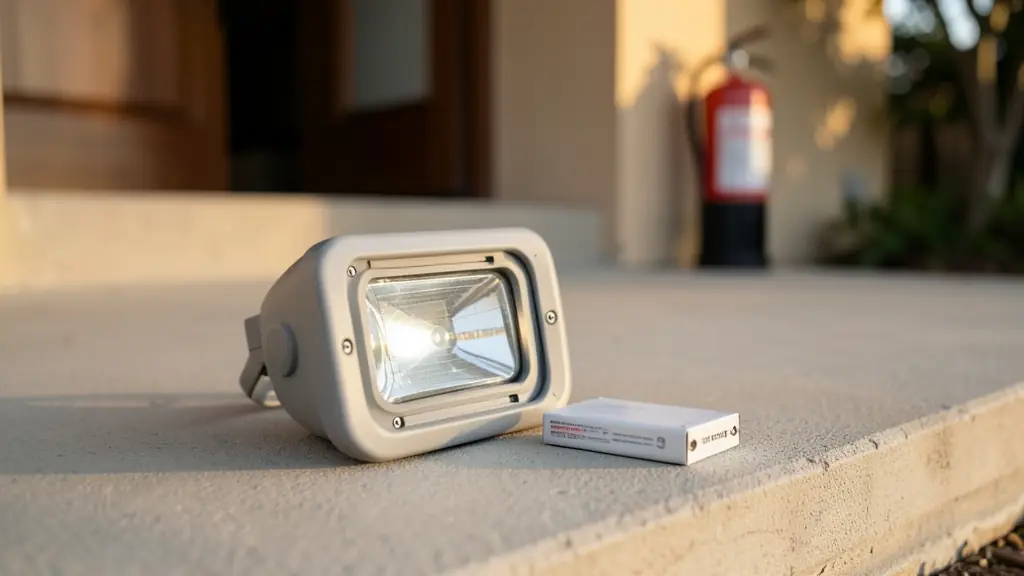
Are solar lights safe? For almost every household, yes. Millions of garden and wall lights sit on South African walls with no trouble. When a solar light does catch fire or burst, the cause is nearly always the battery: a cheap or damaged lithium cell, too much heat, water in the battery box, or the wrong cell put in by hand. Here is what actually goes wrong, what does not, and the signs a light should come down.
The real fire risks
- A cheap or damaged lithium cell. Lithium ion cells with no proper protection circuit can overheat when charged or shorted. A cell that was dropped, crushed or pierced is the most likely to fail.
- Heat. A light left on a car dashboard or a bakkie seat in summer, or stored in a hot roof space, can push a lithium cell past its limit.
- Water in the battery box. Rain getting past a failed seal can short the cell or the board and corrode the contacts.
- The wrong cell. An alkaline or a lithium cell put where a NiMH cell belongs can leak, swell or overheat.
LiFePO4 packs are far more tolerant of heat than cheap lithium ion. See solar light batteries.
Why do solar lights explode?
Mostly they do not explode; they swell, hiss, smoke or split the housing when a lithium cell fails and gas builds up inside it. That is called thermal runaway, and it follows heat, damage, a short or a faulty charge circuit. A swollen pack is the warning you get before it happens. Myths worth clearing up: the panel itself does not start fires, a solar light does not focus sunlight like a magnifying glass, and a light in the rain is fine if its seals are good. Read waterproof solar lights for what the ratings mean.
Storing, charging and disposing of the batteries
- Store spare lights and cells somewhere cool and dry, not in the car, the roof or a sunny window.
- Charge cells only in the light or in a charger made for that chemistry.
- Never throw a lithium cell into the household bin, where it can be crushed in the truck. Take it to a battery drop off point at a retailer or recycler.
- Tape the ends of a damaged cell and keep it on a non flammable surface outdoors until you can drop it off.
Signs a light must go, and kids and pets
Take a light down if the housing bulges, the battery box is hot to touch on a cool day, it smells of burnt plastic, or you see scorch marks or white crust around the cells. Keep small button cells and loose AA cells away from toddlers and dogs, who chew garden lights. If a light needs repair rather than replacement, see solar light repairs; and use the battery replacement finder to fit the right cell.
What to put in your request
- The kind of light and where it will be mounted
- Ask for the battery type and its chemistry
- Ask for the battery's test report on bulk orders
- Mention if lights are near thatch or timber
- Say if you need old lights removed or recycled
Solar Light Safety: who asks for them and why
- Homeowners and tenants: checking garden lights for swollen cells and keeping spares out of a hot garage
- Estates, complexes and body corporates: trustees asking for battery test reports before lights go up near thatched roofs
- Farms, smallholdings and lodges: lights near hay bales and timber sheds fitted with heat tolerant battery packs
- Shops, guesthouses, churches and offices: a lodge with thatch and timber decks choosing sealed fittings with LiFePO4 cells
- Municipalities and public contractors: contractors specifying battery chemistry and test reports for street heads in hot towns
- Schools, clinics and sports clubs: lights fitted out of reach, with no loose cells for learners to pick at
- Mines, depots, yards and sites: perimeter heads near fuel stores fitted with tested packs and inspected each season
- Venues, events and campsites: hire lanterns charged and stored cool between weddings, with damaged units pulled