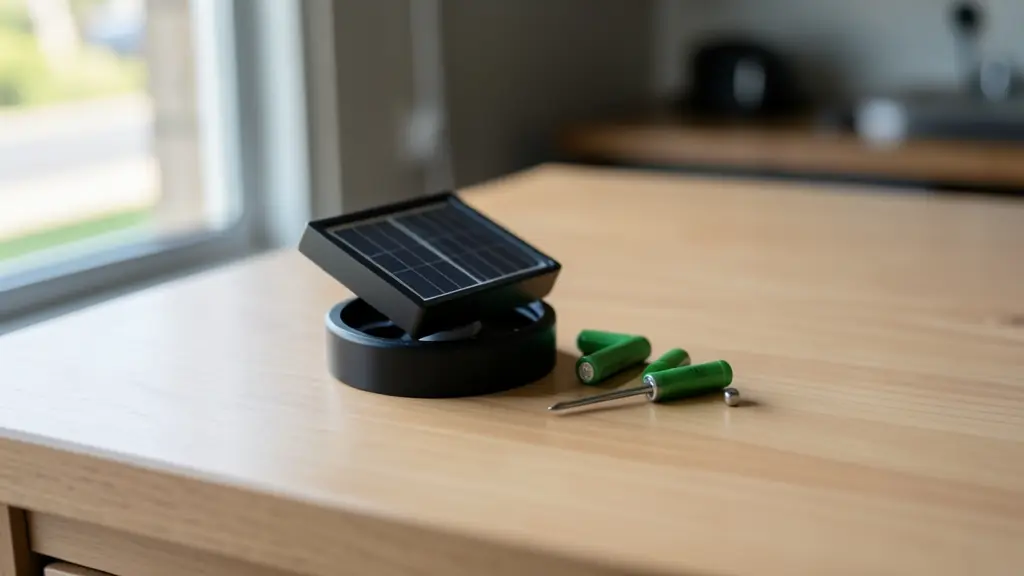
Most calls that start with "my solar light is not working" end with a cleaned panel or a fresh cell, not a new light. A light that was bright in summer and gives an hour of glow by June usually has a tired battery or a panel now in winter shade. Work through the symptoms below in order. Then decide between a cheap fix at home, a repair by a supplier, or replacing it with something built to last.
Match the symptom to the likely cause
- Dim or only on for an hour. A worn cell, a dirty panel, or winter shade from a tree or eave.
- Dead. The switch is off, the pull tab under the hatch is still in, or the cell is flat or corroded.
- On during the day. Dirt or a sticker over the light sensor.
- Flickering. A loose spring contact or a cell at the end of its life.
- Fog or water inside. A failed seal on the hatch, a cracked lens, or a cable gland that let rain in.
- Motion mode stuck on or off. Mode set wrong after a reset, or a branch moving in front of the sensor.
Five fixes you can do with a cloth and a screwdriver
- Wash the panel with a damp cloth. Highveld dust and bird droppings cut charge more than people expect.
- Open the hatch, clean green or white corrosion off the springs, and dry the inside.
- Swap the cell for the same type and voltage: an AA NiMH for an AA NiMH, never an alkaline. The battery replacement finder helps you read the old one, and solar light batteries covers the types.
- Leave the light switched off in full sun for two days so the new cell fills before its first night.
- Move the light or its panel to where it gets the winter sun from mid morning to mid afternoon.
When a repair is not worth it
A cheap marketplace stake light with a sealed cell, a yellowed panel and rust on the board costs more in your time than it is worth. Replace it, and look for a fitting with a screw down hatch and a cell you can buy again. Where water keeps getting in, read waterproof solar lights before choosing the next one. A swollen or hot cell is a different matter: stop using it and see solar light safety.
Street, flood and commercial lights
A street head on a 6 m pole or a farm flood with a separate panel needs a cherry picker and someone who knows the controller. Repairers test the pack, read the controller, replace the LED board or pack, and reset the timer profile. Ask for a call out fee and a price per head, and whether they carry spare packs for your model.
What to put in your request
- The kind of light and how many are faulty
- What it does: dim, dead, on all day, flickers
- How old the lights are and where they are mounted
- Photos of the label, the hatch and the panel
- Mounting height, and whether a ladder will reach
Solar Light Repairs: who asks for them and why
- Homeowners and tenants: garden stakes and wall lights that went dim after the first winter, fixed or replaced
- Estates, complexes and body corporates: a body corporate's row of road heads tested and repacked instead of all swapped out
- Farms, smallholdings and lodges: yard floods and kraal lights brought back after dust, rain and a few years of use
- Shops, guesthouses, churches and offices: a guesthouse's path lights and a shop's car park heads repaired between seasons
- Municipalities and public contractors: street heads in a township ward checked under a maintenance contract after complaints
- Schools, clinics and sports clubs: walkway and hostel lights that stopped working, found and fixed before the term starts
- Mines, depots, yards and sites: perimeter heads on a yard or depot fence tested at height with spare packs on hand
- Venues, events and campsites: hire stock of lanterns and festoon lines checked, recharged and sorted after a busy season