Why Choose Solar Light Bulbs
Understanding the Basic Technology Behind Solar Bulbs
The sun is a miser with its hours, but the energy it loans us can be hoarded. We see these fixtures glowing in garden beds and along driveways, yet few understand the alchemy within. A solar light bulb is not merely a lamp; it is a small, silent rebellion against the grid. Consider the photovoltaic cell, a wafer of silicon that drinks the daylight and converts it into a direct current. That current travels to a rechargeable battery, typically lithium iron phosphate, which holds the charge until the shadows grow long. When darkness falls, a sensor triggers the discharge, and the LED array ignites with a soft, steady luminescence.
What makes these fixtures so compelling is their absolute self-sufficiency. There is no wiring to bury, no electrician to employ, and no monthly tariff to negotiate.
– The initial purchase price is the only cost; the sunlight is free.
– Installation takes minutes, not hours.
– They operate independently, so a power failure leaves your pathways illuminated.
The resilience here is physical. These units are housed in weatherproof casings, rated for the dust and downpours of the Highveld. The LED itself is the final piece, a diode that produces more light per watt than any filament, ensuring the stored energy lasts the entire night. You are not just buying solar lights bulbs; you are buying a small, autonomous system that answers to the sky, not to Eskom.
Cost Savings Compared to Traditional Lighting Options
The relentless escalation of municipal electricity tariffs in South Africa has transformed a simple utility bill into a source of financial anxiety. When you purchase solar lights bulbs, you are effectively pre-paying for years of illumination at a rate that the grid can never match. The capital outlay feels immediate, but the arithmetic favours the patient homeowner.
Consider the hidden costs of traditional lighting that extend beyond the monthly statement. A single halogen or incandescent fixture consumes wattage at a rate that seems negligible until you multiply it by the number of lights in a garden, a driveway, or a security perimeter.
– No wiring means no need for a certified electrician to install or repair.
– No ongoing consumption means the remote, dark corners of your property can stay lit without penalty.
– No phased load shedding means your outdoor visibility remains constant when the grid collapses.
The replaceable components in these units, the battery and the LED, have a lifespan that outlasts several standard bulbs. That energy shift is a form of fiscal discipline. The money you would have spent on usage fees is redirected to other priorities, and the value accumulates while you sleep.
Environmental Benefits and Reducing Your Carbon Footprint
South Africa generates over 80% of its electricity from coal. Every grid-linked bulb you switch on feeds that dependency. Install solar lights bulbs and you sever the connection entirely. Each unit captures sunlight and converts it into clean illumination without burning a gram of coal.
The environmental benefits extend beyond emissions. The full lifecycle of a conventional lighting setup carries an ecological toll:
- Coal extraction scars the landscape.
- Transmission lines waste energy over distance.
- Failed bulbs accumulate in landfills.
- Solar units generate their own power with zero infrastructure.
Your property generates its own power supply. The carbon footprint of outdoor lighting reduces to near zero. I find that transformation remarkable. It matters in a country where Eskom’s coal dependency remains a national concern. Choose solar lights bulbs and nightly illumination becomes an act of quiet environmental responsibility.
Versatility for Indoor and Outdoor Applications
The grid falters at 4 a.m., but solar lights bulbs hold their own in that silence. Their versatility extends far beyond a garden stake. I have placed one inside a dark tool chest, another above a basin in a windowless bathroom. Indoors, they illuminate wardrobes, passageways, and laundry rooms. Outdoors, they cling to fences, pergolas, and security gates.
Certain spaces demand a fixture that ignores the limitations of wiring:
- A rental property where no permanent changes are allowed
- A caravan or tiny home without access to grid power
- A narrow alley between buildings that never sees direct sunlight
Each spot works because the bulb is independent. That independence turns every dark corner into a question you can answer.
Types of Solar Light Bulbs
Solar-Powered LED Bulbs for General Illumination
Across South Africa, the shift to solar lighting has moved beyond novelty. The most common form is the solar-powered LED bulb for general illumination, which replaces conventional bulbs in existing fixtures.
These bulbs integrate a small photovoltaic cell, a battery, and an LED array directly into the glass envelope. When dusk falls, the bulb draws from its internal charge to produce steady light. I have found three variations.
- Self-contained screw-in bulbs with a built-in solar panel
- Remote-panel bulbs that connect to a separate photovoltaic module
- Hybrid fixtures that combine solar charging with mains backup
Each type suits different spaces. The self-contained version fits a porch or garden path. Remote-panel bulbs work well for shaded interiors. Hybrid units offer reliability during prolonged overcast weather. When selecting solar lights bulbs, consider your daylight exposure and typical evening usage. The best solar lights bulbs will match their battery capacity to your nightly needs.
Motion-Activated Solar Security Bulbs
Motion-activated solar security bulbs take a completely different approach from steady illumination. They lie in wait, their passive infrared sensors holding a quiet vigil until a person, animal, or vehicle crosses the detection arc. Then they snap to life, flooding dark corners with sudden brightness. I appreciate this design because it conserves stored energy for the moments that actually matter, which makes these solar lights bulbs ideal for driveways, farm gates, and narrow passages between buildings. The element of surprise also deters loiterers who prefer to work unseen. When evaluating such a unit, pay close attention to the sensor’s reach and its horizontal sweep. A narrow field forces you to mount the fixture precisely, while a wide field covers more of your perimeter.
Reliability hinges on battery resilience and the quality of the pir sensor itself. South African summers can dazzle a solar panel with harsh glare, yet the battery still needs enough reserve to power repeated triggers throughout the night. Consider these key specifications before you purchase:
– Detection range, typically 5 to 12 meters.
– The adjustable timer that controls how long the light stays on.
– The lumen output, which determines whether the beam can wash over a whole yard or just a doorway.
These solar lights bulbs excel in places where constant lighting is wasteful, offering security on demand while preserving every drop of collected sunlight.
High-Lumen Solar Bulbs for Large Open Areas
High-lumen solar lights bulbs demand a different mindset. Where motion detectors conserve power by rationing it, these units spend it freely. A large open area such as a farmyard or a loading bay needs a beam that stretches far and holds steady. The first spec to check is the lumen count. Anything below 1000 lumens will struggle to light a wide space with authority. South African users often pair these with separate panels to top up the battery through long winter nights.
What separates a true high-lumen unit:
– A larger LED array producing a wider, more consistent spread.
– A detachable panel for better placement and faster charging.
– A battery capacity measured in watt-hours that real-world testing supports.
The most common mistake I see is picking a bulb with an impressive number on the box while ignoring discharge rates. The best solar lights bulbs deliver steady brightness without losing the ability to switch on early in the evening. That staying power matters more than peak output.
All-in-One Solar Shed and Utility Bulbs
The shed is where solar lights bulbs earn their keep. All-in-one types combine the panel, battery, and LED into a single housing, installing with two screws and minimal fuss.
Utility bulbs trade high brightness for endurance, focusing on a steady 200 lumens that lasts until you lock the door. Some units feature a rotating head to aim light across a workbench. One South African farmer I know swears by a simple pull-string model because it has no electronics to fail.
- Match the battery to your climate, lithium iron phosphate handles heat well.
- Verify the panel angle can be adjusted for winter sun.
These solar lights bulbs rarely need a motion detector, since the user typically walks in with a purpose. A durable plastic housing resists dust and moisture, essential for coastal or dry inland regions.
Key Features to Evaluate Before Buying
Battery Capacity and Replacement Lifespan
A solar light is only as dependable as its battery, and many shoppers overlook this until the unit fails on a cloudy Tuesday. The battery capacity dictates how many hours of illumination you get after the sun goes down, which is a critical metric in South Africa where load-shedding schedules can be unpredictable. A bulb with a small battery might only run for two hours, which is useless for a security light. You want a unit that stores enough energy to cover a full night of operation, even if the day was overcast.
The replacement lifespan is the other side of the coin. Battery cells degrade over time, and a cheap unit might lose half its capacity within a year. Look for lithium iron phosphate cells, which handle heat better than standard lithium-ion options. The harsh South African sun can cook a battery, so thermal management is a real concern. Consider these factors when comparing models:
1. The number of charge cycles the battery is rated for.
2. The ambient temperature range the battery can survive.
3. Whether the bulb has a removable battery for easy swapping.
A bulb with a sealed, non-replaceable battery might be cheaper upfront, but you will throw the whole unit away when the cell dies. That is a false economy. Instead, look for modular designs that allow you to slot in a new battery pack. This extends the useful life of the fixture significantly. Ultimately, you are paying for stored energy and the ability to replenish it, so pay attention to the specs that actually determine how long these solar lights bulbs will serve your property.
Solar Panel Efficiency and Charging Speed
Typical monocrystalline panels convert only about 20 percent of sunlight into electricity. Efficiency dictates how much usable power a fixture can squeeze from limited exposure. In South Africa, where winter days are short and summer storms appear without warning, a slow-charging panel is a liability. The best solar lights bulbs use monocrystalline cells rated at 18 percent efficiency or higher, a trait that matters in shaded courtyards or under tree canopies.
Charging speed depends on the charge controller too. A pulse-width modulation controller with temperature compensation prevents overcharging on hot Highveld days. Compare these specifications when evaluating panels rated at 5 watts or more:
- Open circuit voltage, which should exceed the battery’s nominal voltage.
- Charge current in milliamps, which reveals how fast the battery refills.
The panel’s physical dimensions often reveal more than its wattage rating, so measure the surface area when comparing solar lights bulbs.
Brightness Output Measured in Lumens
A 100 watt incandescent bulb blasts 1600 lumens, yet many solar lights bulbs claim comparable brightness with a fraction of the power. Lumens measure actual light output, not wattage consumption, and that distinction determines whether your courtyard glows or merely twinkles after sunset.
Look past the product title. A solar bulb rated at 800 lumens might deliver only 450 after an overcast Cape Town day. Check the lumen figure at full charge, then ask about the discharge curve. Does it hold brightness for four hours or dim to 30 percent by the second hour?
- Test the colour temperature, since 3000K looks warmer than harsh 6500K.
- Compare lumens per watt, a simple efficiency ratio.
For security lighting, South Africans need consistent lumens from dusk till midnight, not a dramatic fade.
Weather Resistance and IP Ratings
South Africa’s sun delivers relentless UV, yet the weather fights back with hail, wind, and salty air. Your solar lights bulbs need more than a bright chip, they need armor! Weather resistance determines whether that bulb survives its second year or becomes a cracker. I’ve seen too many budget bulbs give up after one rainy season.
Check the IP rating before purchasing. An IP65 rating handles heavy rain and dust, while IP44 only copes with splashes froma garden hose. For exposed coastal gardens, inspect the seals for corrosion resistance.
- IP44 for sheltered stoeps,
- IP65 for open boundary walls,
- IP67 for flood-prone areas,
Without proper ingress protection, your investment fails during the first thunderstorm! The cheap bulb dreads winter, a weatherproof one copes.
Built-in Sensors and Remote Control Options
A pitch-black gate after a long day is a South African reality. Built-in sensors on solar lights bulbs remove that guesswork. A dusk-to-dawn photocell detects fading light and switches the bulb on automatically, which suits properties where the sun sets behind a mountain.
Remote control options vary. Infrared remotes demand a clear line of sight, so they fail around corners. Radio frequency remotes operate through brick walls, which makes them practical for larger yards. Some units adjust brightness or set a timer.
- Confirm the remote range matches your property size.
- Check if the sensor can be disabled for manual operation.
- Ask if the remote is paired to a specific batch of solar lights bulbs.
These features matter because a sensor that triggers from a neighbour’s floodlight becomes a nuisance, and a remote that stops working after rain defeats the purpose of solar lights bulbs.
Durability of Materials and Overall Build Quality
South Africa’s sun gives generously in summer, then vanishes for weeks of winter rain, exactly when most solar lights bulbs decide to quit. Durability starts with the housing. Polycarbonate outlasts standard ABS plastic because it resists UV embrittlement. Seams matter. A cheap screw hole lets in moisture, and moisture kills the circuit board faster than a power surge. Check the lens. Tempered glass handles hailstones that would shatter standard acrylic. The solar panel needs a hardened surface too. Budget units often skip the gasket between panel and housing. That tiny rubber ring keeps your solar lights bulbs alive through a Highveld thunderstorm. A claimed IP65 rating carries more weight than a slick design. For the price difference, consider paying extra for reinforced mounting brackets; the cheapest plastic arms snap off in a gust of Cape Town wind.
Installation Tips and Placement Strategies
Locating Panels for Maximum Sun Exposure
A solar panel that sits in shade for most of the day will never deliver the charge your battery craves. In South Africa, north-facing placement is non-negotiable below the equator, but don’t trust memory. Use a compass app to confirm the angle. The Karoo sun behaves differently to coastal glare, yet both demand the same core principle: at least six hours of unobstructed rays.
Tree branches, boundary walls, and a neighbour’s roof overhang can cast a surprising shadow. Before drilling holes, study the yard mid-morning and again at midday. Dust and morning dew also coat the glass, so tilt the panel slightly to let rain wash it clean. Seasonal shifts matter too, what is sun-drenched in January may sit in darkness by June.
– Move the panel away from evergreen foliage that grows taller each year
– Leave space behind the fixture for airflow, trapped heat reduces output
Positioning solar lights bulbs requires this same forethought. A well-placed panel keeps your solar lights bulbs charging steadily, even during overcast Highveld weather.
Choosing the Right Mounting Height for Optimal Light Spread
The mounting height determines the quality of the illumination far more than bulb wattage ever will. A fixture fixed too low burns a small, blinding crater into the ground, leaving the surrounding darkness untouched. Raise it too high and the beam scatters into the night sky, wasted on nothing. For most solar lights bulbs, the optimal range sits between 1.8 and 2.4 metres.
– Consider the beam angle: wide beams perform best at lower heights
– Allow for foot traffic: keep the fixture clear of accidental knocks
– Test with a temporary mount before committing to permanent fittings
This range casts a steady pool of light across pathways and doorways without dazzling the eye. In South African homes, where boundary walls vary from a single course of brick to full double-storey screening, the correct height for solar lights bulbs also depends on the surface being illuminated. A low wall needs a lower fixture, while a high ceiling demands a drop-down mount to keep the light where life actually happens.
Avoiding Common Obstructions and Shaded Areas
The sun may be generous, but the shadows it casts are treacherous. In South Africa, the true adversary of a reliable solar light is not the winter load-shedding schedule, but the persistent, creeping shade. A tree that seemed harmless at noon becomes a murderer of lumens by evening. Overhanging branches, boundary walls, and the neighbour’s new garden shed can effectively strangle the solar panel before the bulb even wakes up. When positioning your solar lights bulbs, perform a reconnaissance at sunset. The exact spot where daylight vanishes is the exact spot where your illumination will fail.
Obstructions are often subtle. A gate post, a washing line flapping in the Cape wind, or a decorative trellis can cast a long, stealing shadow across your panel. The placement strategy must account for the path of the sun, not just the location of the doorway.
– Ensure the panel faces true north, where the southern hemisphere sun lingers longest.
– Keep the bulb at least one metre clear of dense foliage that can scratch or overhang the panel surface.
– Check for reflective surfaces like white walls or windows that can bounce light away from the sensor.
In many township homes and suburban estates, the north-facing wall is often the boundary wall, which creates a conflict between security placement and solar efficiency. A bulb mounted on the south side will subsist on a diet of weak, filtered light, rendering it useless by midnight. The result is a fixture that stands as a silent, dark monument to poor planning. The shadow is the enemy, and the sun is the only ally. Choose your battleground accordingly.
Maintenance and Performance Optimization
Cleaning the Solar Panel for Consistent Charging
South African sunlight is abundant, yet most solar lights bulbs fail because of a filthy panel. Dust, pollen, and mineral deposits from irrigation settle on the glass and interrupt the photovoltaic transfer. The loss is gradual. One week the glow dims, the next the bulb dies at eight o’clock. The cause is not the battery. It is the accumulation of neglect.
Cleaning is a quiet discipline. Use a microfiber cloth, warm water, and a drop of dish soap. Remove the panel if possible, rinse with clean water, and dry before reattaching.
- Check the surface weekly during dry months.
- Inspect after heavy dust storms or nearby construction.
- Look for water spots that indicate hard water residue.
Neglect is a choice, and so is maintenance. The bulb charges only when the panel is clean. Attend to it, and your solar lights bulbs will earn their place.
Replacing Batteries to Extend Usable Life
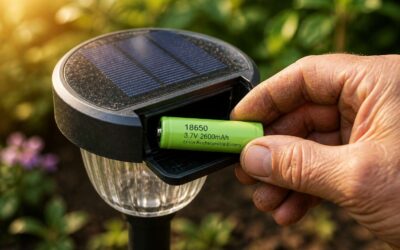
Inside every solar lights bulbs unit sits a battery performing a thankless task. It charges by day, discharges by night, and never complains. But even premium lithium iron phosphate cells lose capacity over time. The telltale sign arrives when your unit extinguishes at 9 PM instead of midnight. That lost hour of illumination is the battery reaching the end of its electrochemical life.
Removing the battery compartment reveals the culprit. Swollen casings, corroded terminals, or white powder around the contacts signal failure. Replacing the cell restores factory performance.
- Verify the exact voltage and connector type before ordering.
- Match the physical dimensions to the housing compartment.
- Choose a reputable brand over generic alternatives.
The entire swap takes under fifteen minutes. Your solar lights bulbs will operate reliably for another two seasons of South African evenings.
Seasonal Adjustments to Maximize Winter Performance
Winter transforms the garden into a landscape of slanting light. The sun’s arc dips lower, stealing hours from your charging cycle. In South Africa, a simple adjustment of the panel angle by 20 to 30 degrees can recover much of that loss.
Consider these seasonal tweaks:
- Tilt the panel toward the northern sky to catch the weaker rays.
- Clear off morning dew and fine dust before they form a film.
- Relocate units that fall under long winter shadows.
These actions keep the battery healthy and the output steady. My solar lights bulbs continue shining past 10 PM even in July’s short days.
Troubleshooting Common Dimming and Charging Problems
The soft glow of solar lights bulbs should never falter without reason. When dimming occurs after a few cloudy days, the culprit is often a dirty charging surface or a loose internal connection. I have seen units resurrect simply by wiping away the siliceous residue left by airborne pollen. A multimeter reading across the battery terminals, taken around noon, tells you if the panel delivers enough voltage. If the reading drops below 3.5 volts, the panel wiring has likely corroded. For charging problems, check the small toggle switch under the battery compartment; many users forget it exists. Here is a quick sequence to restore steady behaviour:
1. Inspect the battery contacts for a white, chalky oxidation layer.
2. Clean the panel with a damp microfibre cloth, never with solvent.
3. Place the unit under direct sunlight for two full charge cycles.
Do not overlook the photoresistor lens. A cracked lens invites moisture, which shorts the sensor and forces the bulb into daylight mode. When each bulb acts independently, swap in a fresh battery before blaming the panel. These small checks keep solar lights bulbs glowing faithfully through the longest nights.
Upgrading Components for Improved Efficiency
The real gains in solar lights bulbs come from thoughtful component swaps. I have upgraded dozens of units by fitting brighter LED arrays that draw the same current. This preserves the charge cycle while raising usable lumens. Another worthwhile change is replacing the dusk sensor with a programmable timer. You avoid wasted energy on moonlit nights.
The battery is the central component.
- Select cells rated for deep discharge
- Verify the regulator handles the new chemistry
Lithium iron phosphate cells outperform nickel metal hydride under South African sun. Their service life justifies the higher price. After upgrades, test under one full charge cycle. These units will respond with steadier output and fewer interruptions.

0 Comments