The Fundamentals of Photovoltaic Lighting Systems
What Are Solar-Powered Light Fixtures and How Do They Work?
Solar-powered light fixtures capture sunlight through photovoltaic cells, converting photons into direct current electricity. That current charges an internal battery, which powers the light once the sun recedes. Most units rely on a photocell sensor to detect ambient light levels and switch on automatically.
In South Africa, where grid reliability varies by region, these fixtures provide a dependable lighting source for gardens, security perimeters, and remote sites. The efficiency of pv solar lights depends on panel quality, battery capacity, and local solar irradiance. A typical system includes:
- Photovoltaic panel
- Rechargeable battery
- LED lamp
- Charge controller
The charge controller prevents overcharging and deep discharge, extending the battery lifespan. This combination allows the fixture to operate without wiring or external power.
The Role of Photovoltaic Cells in Converting Sunlight to Electricity
South Africa receives some of the highest solar irradiation levels on the planet, often exceeding 6 kWh per square metre per day. That abundance matters because every pv solar light depends on how efficiently its panel converts photons into usable electricity.
The process begins inside the photovoltaic cells themselves. These cells are typically made from silicon, a semiconductor that responds predictably to light. Photons strike the cell and transfer energy to electrons, knocking them loose from their atoms. An internal electric field then guides those free electrons toward a conductive circuit, creating direct current. This photovoltaic effect is the entire reason such a fixture can function without grid wiring.
- The purity of the silicon determines how much energy is lost as heat.
- The surface texture affects how many photons are absorbed rather than reflected.
- Cell temperature changes voltage output, which is why scorching days can reduce efficiency.
These factors explain why two pv solar lights with similar wattage ratings can perform so differently in South African conditions.
Core Components: Panels, Rechargeable Batteries, and LED Emitters
Every pv solar light depends on three core components: the panel, the rechargeable battery, and the LED emitter. The panel gathers raw energy during the day. The battery holds it until dusk. The LED spends it with precision. In South Africa, where the sun is generous, the battery often determines the character of the light. A lithium iron phosphate cell, for instance, endures far more charge cycles than its older lead-acid cousins.
The LED emitter converts stored electricity into visible light with remarkable economy. Modern chips achieve over 150 lumens per watt, which means a modest panel can power a surprisingly bright glow.
Here is how the components typically interact:
- The panel charges the battery during daylight hours.
- A controller protects the battery from overcharging.
- The LED draws current only when ambient light fades.
This harmony separates reliable pv solar lights from cheap imitations that flicker after a season.
Key Benefits of Switching to Solar-Powered Illumination
Reducing Carbon Footprint and Environmental Impact
South Africa receives over 2,500 hours of annual sunshine, yet most outdoor lighting still draws from a coal heavy grid. The shift to pv solar lights changes this dynamic. Each unit captures daylight and converts it into clean energy, removing the need for fossil fueled power after sunset.
Consider the cumulative effect. A single conventional porch light burns roughly 100 kWh per year, releasing around 100 kg of CO2. Replace that with a solar fixture and you avoid that emission entirely.
- Reduces household carbon footprint
- Lowers strain on an already fragile grid
- Eliminates outdoor lighting waste during load shedding
From an environmental perspective, I find the gains multiply across a neighborhood. Fewer grid connections, less transmission loss, and no battery disposal from disposable torches. The quiet elegance of this shift lies in its simplicity. You install pv solar lights, you reap the benefit, and the atmosphere does a little better!
Saving on Electricity Costs with Free Solar Energy
A 300W halogen floodlight left on for six hours every night costs the average South African household roughly R160 a month. Switch to pv solar lights and that bill vanishes. The mathematics is simple.
Free solar power is not a promotional gimmick. After the upfront unit price, every lumen costs nothing. Photons do not require metering or municipal approval.
- Eliminates monthly energy charges for outdoor lighting
- Removes the need for electrician call-outs
- Survives tariff increases without adjusting your budget
Every clear day replenishes the battery without asking for ID or a prepaid token. A quarterly saving of R500 becomes an annual R2,000. That is money returned to groceries, school fees, or an investment account.
Low Maintenance and Extended Product Lifespan
Outdoor lighting often fails because of the system around it, not the bulb itself. Wiring corrodes. Fittings rust. Electricians charge call out fees for faults that take years off a fixture’s life. A well built pv solar light changes that equation.
Most pv solar lights sold today have no moving parts and no mains voltage running through the garden. The LED emitter is rated for tens of thousands of hours. The battery, the only component that wears, is engineered to endure years of daily charging cycles. For a South African household, the practical result is a fitting that gets installed, then ignored. In my experience, that silence is the point.
Routine maintenance shrinks to an occasional wipe of the panel and a check that leaves aren’t covering the cells:
– No bulb replacements
– No trenching for cables
– No call out fees for dead circuits
Sealed enclosures resist Highveld thunderstorms and coastal salt air. That longevity translates into economic value over time, especially when compared with the recurring costs of conventional garden lighting.
Achieving Energy Independence for Off-Grid Locations
The notion of a completely off-grid location is no longer a compromise. In South Africa, where the national grid can be a resting lion, the value of a standalone illumination system speaks with quiet authority. A pv solar light is a self-contained ecosystem; it generates, stores, and dispatches energy without asking for a single cent from the local municipality. For lodges in the Karoo or coastal cottages where laying cable is impractical, this independence is a form of liberty. You are no longer waiting for an electrician or a technician. The sun is the only supplier, and the account never goes into arrears.
This autonomy creates a new kind of spatial freedom. You can place a lamp at the end of a long driveway or in a remote corner of a garden where the mains power never dared to reach. The absence of a grid connection also removes the cost of trenching and the frustration of municipal approvals. A solar installation is a conversation between the sky and your courtyard, not a bureaucracy.
Consider the immediate benefits of this separation from the grid:
– There is no monthly metering or hidden cable theft risk.
– The system requires no complex inverter setup for basic garden lighting.
– Installation is possible in locations where construction machinery cannot access.
– The light functions during load shedding without any manual intervention.
The battery is the heart of this independence. A quality unit will hold a charge for days of overcast weather. When the sun returns, the cycle restarts. For properties in remote valleys or on the escarpment, this reliability is not a luxury. It is the difference between a lighted path and a dark one. The pv solar lights you choose become a permanent resident of the landscape, immune to the whims of the central power station. They offer a quiet form of resilience that is both practical and profound.
Versatility for Outdoor, Remote, and Emergency Applications
Versatility defines pv solar lights. They travel where extension cords cannot and stand firm where generators sputter. For a farmstead or a campsite, these fixtures adapt without a single trench.
Emergency situations demand immediate illumination. These fixtures charge by day and deliver light when the grid fails. I have seen them transform a dark workshop into a safe workspace. Their portability lets you move them from a gate to a trailer in minutes.
Each unit operates independently, so one failure never darkens the whole property. That is the real benefit of switching to solar powered illumination.
Different Types of Solar Lighting Solutions for Various Applications
Garden and Pathway Lights with Integrated Solar Panels
Walk a South African garden path after dusk and you will notice how quickly familiarity fades. Garden and pathway lights with integrated solar panels address this problem without laying a single cable. The entire power system fits into one compact unit, removing the need for trenching or an electrician. This self-contained design suits homeowners who want discreet lighting without structural changes.
Common applications for these pv solar lights include:
- Illuminating driveway edges for safe nighttime navigation
- Accentuating garden beds and ornamental plants
- Marking steps or changes in elevation along walkways
The placement of each fixture determines its performance. A unit shaded by a dense canopy will underperform regardless of component quality. Positioning the integrated panel to receive unobstructed sunlight ensures the battery stores enough energy for a full night. For South African gardens with variable sun exposure, pv solar lights deliver practicality that outweighs aesthetics.
Security Floodlights Powered by Photovoltaic Cells
Security floodlights powered by photovoltaic cells have become a familiar sight across South African suburbs, and for good reason. A single motion triggered burst of light can halt an intruder mid stride while costing you nothing beyond the initial purchase. The best units detect movement within twenty metres and flood a yard with illumination that makes hiding impossible.
The true value of these pv solar lights, however, lies in their autonomy. They operate completely off grid, charging during daylight hours and waiting patiently until needed. Some models use a separate panel mounted high on a wall, while others integrate the panel directly into the floodlight housing. Both approaches serve the same purpose: dependable security without electrical complexity.
The features that separate a dependable unit from a frustrating one include:
- Motion sensor range and sensitivity settings
- Battery capacity for cloudy winter days
- Lumen output that actually covers the intended area
These factors determine whether your floodlight performs when it matters most or fails silently.
Street and Area Lighting for Public Spaces
Street lighting in South African townships and rural settlements has historically required expensive trenching, substations, and metering infrastructure. PV solar lights eliminate that wiring entirely. A single pole with an integrated panel and battery can illuminate a pedestrian crossing or community market square. The savings extend beyond installation. There are no monthly electricity bills and no dependence on municipal load shedding schedules.
- Collector roads require higher lumen output and taller poles.
- Pedestrian walkways need lower mounted lights with focused distribution.
- Parking areas benefit from wide-angle illumination that covers multiple bays.
Municipalities can install these pv solar lights in phases, spreading capital expenditure across financial years. The cost per unit has dropped sharply while LED efficiency continues to rise. Maintenance reduces to periodic battery replacement, a task that can be batched across a district. This approach suits any public space that lacks grid access.
Portable and Decorative Solar Lamps for Events
The portable solar lamp has become essential to outdoor events. For a wedding reception in a Cape Winelands garden or a community braai in a Johannesburg park, these fixtures offer something grid-tied lighting cannot: spontaneity. You place them where the evening takes you, not where the electrician planned.
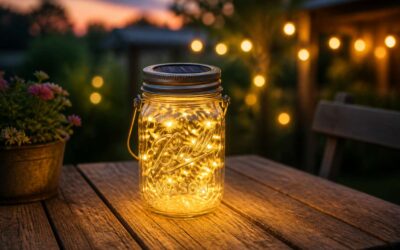
Decorative pv solar lights now imitate everything from vintage lanterns to sculptural art pieces. Some models include colour temperature settings that shift from warm amber to cool white as the evening progresses. The battery capacity determines how long the party can continue, so event planners should match runtime to the schedule.
Consider the practical categories:
– String lights that drape across trees or marquee frames
– Tabletop lanterns with replaceable rechargeable batteries
– Stake-mounted flares that mark pathways or dance floors
– Floating lamps for poolside gatherings
These fixtures charge during the day and ask nothing from the host once darkness falls. Load shedding becomes an afterthought, not an interruption.
Commercial and Industrial Solar Lighting Systems
Load shedding does not respect production schedules. A factory floor left in darkness can halt an entire shift within minutes, while a security gate without lighting becomes an invitation rather than a barrier. Commercial and industrial pv solar lights address these failures at scale.
These systems differ from residential fixtures in output, control, and durability. They use larger photovoltaic arrays and deep-cycle battery banks. For a cold storage facility in Cape Town or a mining operation in the Northern Cape, engineering matters more than aesthetics.
Key commercial and industrial applications include:
- Warehouse interiors and loading docks needing high-lumen output
- Perimeter security lighting for industrial parks and remote facilities
- Parking structures and fuel stations requiring overnight coverage
- Construction sites without temporary grid connections
Get the sizing wrong and you will pay for it twice! Pv solar lights must be sized on solar irradiation data, not guesswork. Highveld systems behave differently along the coast.
Factors to Consider When Selecting Photovoltaic Lighting Products
Evaluating Sunlight Exposure and Geographic Location
South Africa averages over 2,500 hours of sun annually, yet many photovoltaic fixtures underperform due to placement errors. Evaluating sunlight exposure starts with tracking daily shadows and seasonal tree growth. Geographic location changes the sun’s altitude, so a fixture tuned for Durban’s subtropical climate may collect less energy in Upington’s arid zone. Assess these location specific conditions:
- Peak sun hours during winter months
- Reflective surfaces like sand or concrete
- Obstructions from fences, walls, or neighboring structures
Coastal humidity and highveld thunderstorms affect panel efficiency. Choose pv solar lights that match your exact latitude and microclimate, not generic national averages!
Battery Capacity and Autonomy for Cloudy Days
Cloudy days are the weekend your solar panels never asked for. Battery capacity, not panel wattage, decides whether your pv solar lights survive a three day overcast spell. Autonomy is measured in hours of darkness, not forecast promises.
Lithium iron phosphate cells outperform nickel metal hydride in deep discharges. Cycle life matters because Highveld thunderstorms stress storage repeatedly. Depth of discharge limits should be checked, as draining to zero daily shortens battery lifespan.
- Watt hour rating, not just milliamp hours
- Self discharge rate during inactive weeks
- Operating temperature range for coastal humidity
South Africa’s winter overcast tests every system. Choose pv solar lights with at least five nights of autonomy if your area sees persistent cloud cover. That buffer turns a dreary week into a minor inconvenience.
Lumen Output and Light Distribution Patterns
Lumen output gets all the attention, but the distribution pattern decides whether your pv solar lights actually do the job. A 500 lumen fitting with a tight beam can be useless for illuminating a broad yard. The angle of the beam, typically measured in degrees, spreads light across a specific shape. For pathways, a wide flood pattern covers more ground. For security perimeters, a longer throw with a narrower angle reaches the boundary.
Here are some things I check when comparing pv solar lights:
– Beam angle: wider for ground coverage, narrower for distance
– Reflector and lens quality: affects uniformity and hot spots
– Light distribution curve: indicates how even the light falls
South African homesteads often have irregular layouts. A light that spreads unevenly leaves dark corners where animals or intruders hide. Matching the distribution to the space is as important as the lumens on the box.
Durability, Weatherproofing, and IP Ratings
South African weather has a way of testing equipment. The Highveld sun bakes, the coast sprays salt, and summer storms dump rain with enthusiasm! Your pv solar lights need to survive all of it. IP ratings tell you how well a fitting resists dust and water. The first digit covers solids, the second covers moisture. An IP65 rating handles rain and dust fairly well. IP67 means it can survive temporary submersion, which matters when a downpour floods a low-lying area.
- Check the housing material: polycarbonate holds up better than cheap ABS under UV-rich sunlight.
- Inspect the seals and gaskets: they keep moisture out of the battery compartment.
- Confirm the warranty covers corrosion and water damage, not just manufacturing defects.
Water seeps into electronics when the housing fails. That leads to flickering, then a dead unit. Durable housing with properly rated seals costs more upfront, but you won’t be replacing these pv solar lights every season.
Verifying Quality Certifications and Warranty Terms
Certifications are the quiet guardians of performance. When assessing pv solar lights, look for marks like SABS or CE. These confirm electrical safety and adherence to recognised standards. A warranty, on the other hand, reveals a manufacturer’s confidence. Reputable brands often offer five years on panels and two years on batteries, but the fine print matters. Many policies exclude damage from improper installation or unauthorised modifications. Seals and connectors frequently fall outside standard terms, so ask for written clarification.
- Confirm the test standard, such as IEC 61215 for photovoltaic panels.
- Check the battery warranty cycle count, not just the time period.
- Verify local after sales support and spare part availability.
Reviewing these details prevents unexpected costs later. The right pv solar lights will serve you for years, but only if the certification and warranty terms match the promise.
Calculating Budget and Total Cost of Ownership
Most buyers fixate on the sticker price of pv solar lights. That number rarely reflects the real expense. In South Africa, where electricity tariffs climb yearly, the total cost of ownership matters more than the upfront rand amount.
Consider the components. A battery rated for 2,000 cycles at 50% depth of discharge will outlast a cheaper cell pushed harder. The panel’s degradation rate also affects long term output. Polycrystalline panels lose efficiency faster than monocrystalline ones in high heat.
– Replacement battery costs every three to five years
– Cleaning and maintenance labour
– Potential inverter or charge controller failures
– Installation and mounting hardware
Add these to the purchase price and compare across brands. The most economical option is seldom the cheapest one.
From my installations across Gauteng, clients who choose quality pv solar lights save roughly 30% over a decade compared with budget alternatives.
Installation, Maintenance, and Troubleshooting for Solar Lighting Systems
Optimal Placement and Tilt Angle for Solar Panels
The sun’s path across the South African sky is not a constant; it shifts with the seasons, and your solar panel’s angle must accommodate this celestial dance or sacrifice valuable energy. For pv solar lights, the rule of thumb is to face the panel north, as this captures the most sunlight during our Southern Hemisphere days. Your latitude is the primary determinant for the optimal tilt. As a general guide, set the panel’s angle to your latitude for year-round performance. However, to maximise winter output, when the sun hangs lower, add roughly 10 degrees to your latitude. Conversely, for summer, subtract about 10 degrees to catch the higher arc of the sun.
A fixed angle is only part of the equation. Even a perfectly tilted panel becomes inefficient if covered in a film of dust, a common issue in our dry regions. Maintenance extends beyond a cursory wipe; it requires a schedule. Rain helps, but it is rarely enough to remove the stubborn residue left by birds or pollen.
– Use a soft, damp cloth to clean the panel surface every two weeks.
– Inspect the mounting brackets for rust or loosening after high winds.
– Trim back any vegetation that could cast a shadow over the array during peak hours.
Troubleshooting often points back to installation errors. If your lights dim prematurely, check the tilt first, not just the battery. A suboptimal angle can starve the battery of its full charge, mimicking a fault. When issues persist, verify the wiring connections for corrosion, as moisture can seep into seemingly sealed junction boxes. The longevity of your pv solar lights hinges on this proactive care, ensuring the system you install remains a reliable source of illumination for years to come.
Step-by-Step Installation for Common Light Fixtures
Nearly 40% of pv solar lights that fail within their first year trace back to improper installation, not component defects. I have seen fixtures mounted with panels partially shaded at 10am, or wired with reversed polarity that drains the battery overnight.
For a wall-mounted floodlight, switch off the mains before integrating with existing wiring. Then:
- Mount the bracket at least 2.5 metres high, keeping the panel reachable for cleaning but beyond casual tampering.
- Attach the fixture body, torquing bolts evenly to avoid warping the gasket.
- Connect battery leads to the controller, aligning the polarity markers.
- Secure the panel facing north and test the dusk-to-dawn sensor.
Maintenance involves inspecting seals and cleaning contacts twice a year. If a light flickers, check connector pins for corrosion before suspecting the LED. A loose earth wire or cracked junction box is often the actual failure. Done right, your pv solar lights stay reliable through Highveld storm seasons.
Cleaning and Care to Maximize Performance
Dust and bird droppings block irradiance before it reaches the photovoltaic cells. In South Africa’s dry months, a dirty panel can lose a third of its output. I have seen pv solar lights fail simply because nobody wiped the glass.
Cleaning takes two minutes! Use water and a soft cloth. Avoid abrasive cleaners. Inspect the gasket while you are there. A cracked seal lets moisture in, and moisture kills batteries.
- Wipe panels at dawn or dusk to avoid thermal shock.
- Check connector pins for corrosion each season.
- Tighten brackets after high winds.
Flickering often traces back to corroded contacts, not dead LEDs. Keep the terminals clean and the seals intact, and your pv solar lights will hold their own through Highveld storm seasons.
Diagnosing Common Issues and Replacing Components
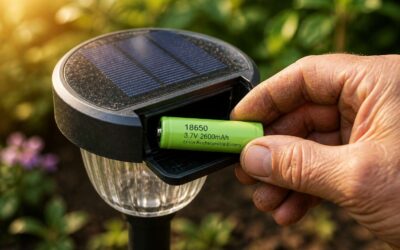
Over 70% of solar lighting failures trace to a single component, the battery, not the photovoltaic panel. When diagnosing pv solar lights, start there. Most systems use lithium iron phosphate cells now; they tolerate heat better than older chemistries. Replacement takes five minutes. Undo the housing screws, disconnect the proprietary plug, swap in a matching unit, and reassemble.
Other common issues appear at the connections:
- LEDs flicker when the battery nears empty, not when it fails.
- Intermittent outages often come from loose wiring inside the junction box.
- No output after a storm means the controller board likely took a surge.
For fixtures with integrated panels, test the panel voltage at noon. An open circuit reading below 18 volts signals cell degradation. Replace the panel if it fails that test. Most owners replace components unnecessarily; verify the failure first.
Future Trends and Innovations in Photovoltaic Lighting Technology
Advancements in High-Efficiency Solar Cell Materials
South Africa’s solar revolution has shifted from question to equation. The next frontier for pv solar lights lies in materials that convert more sunlight into usable electricity. Perovskite cells, once confined to laboratories, now challenge silicon’s dominance. Tandem architectures stack multiple layers to capture wavelengths that single junctions discard.
This evolution reshapes outdoor lighting. Higher efficiency enables smaller panels for identical lumen outputs, reducing fixture footprints and production costs. Improved low-light performance extends autonomy through overcast afternoons in Gauteng.
- Perovskite-silicon tandem cells exceed 30 percent efficiency in pilot production.
- Flexible substrates permit curved designs that blend into landscaping.
- Self-healing encapsulation layers resist ultraviolet degradation.
For South African homeowners and municipalities, these advances mean fewer maintenance callouts and more reliable illumination. The sun delivers in abundance; future pv solar lights will simply capitalise on every ray.
Smart Lighting Controls and Motion Sensor Integration
Modern pv solar lights are as intelligent as they are luminous. Smart lighting controls pair photocell sensors with programmable timers. A fixture can switch on at dusk, dim to 20 percent by 22:00, and return to full brightness only when a person crosses its path. That flexibility directly cuts wasted energy.
Motion sensor integration extends battery life. The panel spends the day topping up cells. The LED waits in standby. When a person or vehicle approaches, the lamp responds in milliseconds. For South African properties, this means effective security lighting without illuminating empty driveways all night.
Consider the controller options:
- Smartphone schedule customisation
- Self-diagnosing battery health reports
- Wireless fault alerts over LoRaWAN
Municipalities in Gauteng now specify these controllers to reduce maintenance routes. The wiring stays simple. The behaviour becomes adaptive. pv solar lights operate on demand, not on a fixed clock.
Connecting Solar Lights to IoT and Energy Networks
In South Africa, the next leap for pv solar lights is their role as data nodes. Each fixture can report irradiance, battery state, and theft attempts. That information flows into municipal dashboards, turning streetlights into a sensor network!
Energy networks benefit too. These pv solar lights can feed surplus power back to a microgrid during peak demand. When paired with IoT gateways, they become part of a distributed energy resource.
- Solar lights with cellular connectivity for remote diagnostics
- Bidirectional inverters that allow energy export
- Blockchain-based metering for community energy trading
Pilot projects in Gauteng already test these features. The hardware is modular; the network is the differentiator.
Emerging Battery Technologies and Storage Solutions
The next chapter for pv solar lights in South Africa hinges on storage that outlasts the night. Lithium iron phosphate cells already dominate, but sodium-ion and solid-state prototypes promise higher cycle counts and safer thermal profiles. These chemistries tolerate heat better, which matters for our climate.
New storage solutions also enable smarter energy allocation. A fixture can bank surplus daytime generation and release it during evening peaks, reducing grid dependence. Modular battery packs allow field replacement without discarding the entire unit.
- Sodium-ion cells for low cost and cold resistance
- Solid-state electrolytes for compact, fire-resistant packs
- Graphene-enhanced supercapacitors for rapid charge bursts
For municipalities, this means lower replacement frequency and predictable performance. The shift to advanced storage turns pv solar lights into resilient infrastructure beyond simple illumination.


0 Comments