Exploring Solar Lighting Options at Major Home Improvement Retailers
Path and Walkway Lights
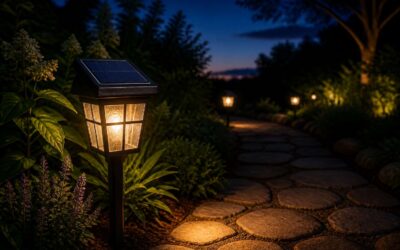
How quickly a familiar walkway turns mysterious after dusk! Solar path lights solve this without adding a cent to the electricity bill. At solar lights home depot, the range of walkway lights covers both decorative and focused options. Some units have separate panels and connecting cables, while others combine the cell and lamp into one polished stake. Brightness varies from a cool white glow to warm amber tones.
Terrain shapes every choice. Long grass or frequent rainfall reduces the sunlight reaching a compact panel. Shaded pathways, especially those under trees, require a unit with a remote panel or a higher capacity battery. Battery capacity and panel position determine whether the evening route stays visible through the seasons.
Spotlights and Floodlights
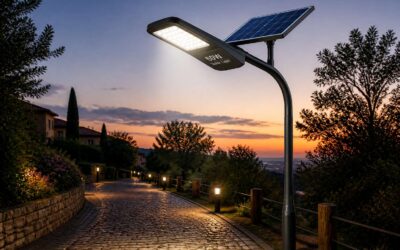
Nearly 40% of outdoor lighting upgrades now lean on solar technology. At solar lights home depot, the spotlight and floodlight range answers a different need than walkways: pure emphasis and security. I have tested units that throw a beam up to 15 meters, enough to wash a boundary wall in light after sundown.
Floodlights with motion sensors draw less attention until movement occurs. Their detection range and angle matter more than raw brightness. For a dark driveway, a 2000 lumen spotlight transforms the space without raising your electricity bill!
- Check the battery type: LiFePO4 lasts longer in high heat.
- Verify the ingress protection rating for coastal areas.
These details make solar lights home depot a practical stop for tailoring your exterior.
Decorative String and Accent Lights
Evenings in South Africa are made for long braais, and the right glow changes everything. Decorative string lights and accent lighting at solar lights home depot create a welcoming atmosphere without overpowering the scene. These options are about texture and warmth, not visibility or security.
I have seen solar string lights with warm amber tones that mimic candlelight, perfect for draping across a pergola. The photovoltaic cells collect daylight and switch on automatically at dusk, so you set them up and forget them. For accenting a feature, consider compact solar spotlights with coloured filters or fairy lights woven through a shrub.
- Weatherproof casings for coastal humidity
- Multiple lighting modes (steady, twinkle, fade)
- Detachable solar panels
The practical benefit of solar lights home depot lies in their range of decorative styles, from minimalist globes to rustic lanterns. They extend your living space into the twilight hours, purely for pleasure.
Deck, Step, and Railing Lights
The deck is the last place you want to fumble in the dark. South African evenings arrive quickly, especially between winter and summer. Step lights and railing lights turn a hazardous descent into a graceful one.
A friend recently installed solar fixtures along his braai area. He chose slim profile units with frosted covers. They emit a low amber glow that outlines each tread without blinding anyone. The solar lights home depot range includes models with separate panels. That way you place the panel in full sun while mounting the light in a shaded stairwell.
- Lenses that direct light downward
- Battery compartments with silicone gaskets
- Mounting brackets for horizontal and vertical rails
I prefer lights with a dusk sensor and a timer. They switch on at twilight and off by midnight. At solar lights home depot, you can match the finish to your existing railing. It turns a purely functional element into part of the landscape.
Critical Features to Evaluate Before Your Purchase
Brightness Output in Lumens
Most shoppers overlook lumens and fixate on wattage when browsing solar lights home depot. That is a mistake. Lumens measure actual visible light; wattage only tells you energy consumption. A 10-watt LED can outshine a 30-watt incandescent bulb.
For security, demand at least 100 lumens. For ambiance, 10 to 50 is plenty. South Africa’s intense UV exposure degrades LED phosphors over time, so verify the lumen maintenance rating. A fixture retaining 70% brightness after 50,000 hours beats one that dims to half in two years.
Weigh these variables:
- Directional beam angle versus flood spread
- Colour temperature in Kelvin
- Battery capacity matched to panel output
Match lumens to your mounting height and intended coverage. Solar lights home depot ranges vary wildly here. Test the beam pattern before you commit!
Battery Capacity and Recharge Time
Most solar lights fail at the battery, not the panel. Battery capacity determines the endurance of any solar lights home depot purchase. A panel may soak up the African sun, but the cell stores that fleeting gift. Measured in milliamp hours, this figure dictates how long your light lingers after dusk. Recharge time matters just as much.
Overcast days in Cape Town can stretch a full charge to twice its usual span. Lithium iron phosphate cells endure the heat without swelling. The critical specifications are:
- Hours of light needed nightly
- Depth of discharge tolerance
- Panel output voltage matching the battery
A mismatched pair leaves you in darkness before midnight.
Solar Panel Efficiency and Type
Solar panel efficiency determines how much juice your fixture squeezes from daylight. Monocrystalline silicon panels outperform polycrystalline and amorphous film by a wide margin. For South African summers, monocrystalline is the prudent choice. They endure heat without degrading!
Panel placement matters equally. A shaded veranda cripples any solar lights home depot purchase, regardless of the cells underneath.
Here is what separates reliable panels from cheap ones:
- Conversion rate of 18% or higher
- Tempered glass coating to withstand hail
- Proper sealing around the junction box
Thin-film panels flex into curves, but they surrender efficiency. Go rigid for permanent fixtures. Trust me, the panel is the engine. Choose accordingly.
Weather Resistance and IP Ratings
A light that fails after one rainy season in Durban or Cape Town is worthless, regardless of its initial brilliance. When you scrutinise solar lights home depot, inspect the IP rating. This two digit code governs immunity to dust and water. Do not trust the packaging alone!
The first digit blocks solids, the second blocks moisture. An IP65 rating shields against dust and low pressure water jets, which suits most courtyards. An IP67 allows temporary submersion, useful for pool edges.
- IP65 is the floor for permanent mounting.
- IP67 suits exposed soils and pool verges.
- Reject anything under IP54.
Yet ratings ignore ultraviolet degradation. Cheap acrylic yellows under the African sun, so demand polycarbonate housings. I have seen ‘waterproof’ units crack their gaskets in eight months. Sealing compound around the switch and wires matters as much as the stamped number. Even the best solar lights home depot listings fail when the sealant is thin.
Motion Sensor and Security Capabilities
I have tested enough wall-mounted units to know that the first question is not brightness but detection accuracy. Passive infrared sensors read body heat, yet the lens shape decides whether you cover a narrow footpath or a full driveway. A fixed sensor causes headaches. Choose adjustable heads that aim coverage toward the gate and away from the neighbour’s cat.
Timing matters just as much. Cheap sensors drag a half second, and that delay lets a figure glide past the lamplight. While reviewing solar lights home depot, I trigger the unit at dusk to see how fast it reacts in warm conditions.
- Range: at least 8 metres for a residential boundary.
- Shielding: small baffles that block streetlight interference.
- Duration: stay lit for 30 seconds minimum.
Lastly, demand a low always-on mode. That single feature turns the same lamp into a nightly guide and an unexpected security camera, since movement briefly boosts it to full power. That flexibility is what separates a true security light from a simple decorative piece.
Warranty and Expected Lifespan
A warranty tells you more about a product than the marketing copy ever will. When you browse solar lights home depot, the warranty period reveals manufacturer confidence. A five year LED warranty means little if the battery is only covered for six months!
I always check the fine print for what counts as wear. Corrosion, battery fade, and seal failure are common exclusions. Some brands prorate coverage, so the refund shrinks each year.
- Battery replacement terms, since lithium cells lose capacity after 500 cycles.
- Seal integrity coverage, because water ingress appears slowly.
- Return shipping conditions, which can cost more than the lamp.
Realistic lifespan is three to five years for outdoor solar units. The LEDs last a decade, but the rechargeable battery fails first. In South Africa’s high UV areas, the plastic housing degrades faster. A warranty covering the whole unit matters more than an LED rating assuming perfect conditions.
Selecting the Perfect Outdoor Illumination for Your Property
Defining Your Lighting Goals and Areas to Illuminate
Landscape illumination fails when it is purchased before it is planned. I have watched homeowners choose fixtures on looks alone, only to find the panel never sees direct sun. Before you browse solar lights home depot aisles, map your property’s functional zones. Do you need to guide guests from driveway to door? Deter intruders along boundary walls? Create a quiet corner for evening reading? Each answer dictates a different fixture and placement strategy.
- Access routes where foot traffic moves after sunset
- Thresholds where doors, gates, and garages create transition points
- Living spaces outdoors where conversation and dining occur
Document the sun’s path across your garden. A zone with full northern exposure charges panels differently than a shaded patio. This assessment, done before any purchase, prevents the disappointment of a beautiful fixture that never performs. When you finally explore solar lights home depot, you carry a precise specification list instead of vague preferences.
Matching Styles and Finishes to Your Landscape
While lumen counts and battery specs matter, the finish dictates whether your garden looks curated or chaotic. Solar lights home depot ranges include everything from brushed nickel to antique bronze, and choosing wrong is a common mistake. Your landscape has a texture, a material story. Match that story.
- For a sandstone pathway, choose warm bronze tones.
- For a minimalist concrete courtyard, go with gunmetal grey.
- Let the finish echo your door handles and window frames.
Walk outside and observe what your eye already sees. New brass handles and black solar fittings clash. Instead, find a fixture that borrows from the tones around it. When you finally buy solar lights home depot products, the result feels less like an installation and more like the garden grew them.
Professional Installation and Strategic Placement Techniques
Preparing the Ground and Mounting Surfaces
A poorly positioned light can lose half its potential output before sunset, so when you buy solar lights home depot ranges, placement matters. Observe the sun’s path across your property for a full day. Note where trees, walls, or roof overhangs cast long shade during peak charging hours.
For ground mounting, dig a stable base that prevents tilting after rain. Remove turf and compact the soil, then add a layer of coarse sand. If you have heavy clay, install a galvanised stake anchor. For hard surfaces, use a masonry bit and secure brackets with stainless steel screws.
- Level the mounting surface with a spirit level.
- Angle the panel toward the equator for optimal winter sun.
- Leave 10 cm of clearance behind the fixture for airflow.
Strategic placement means thinking about reflected light from walls or water features, which can supplement direct exposure.
Optimizing Solar Panel Angle and Orientation
Dusk arrives without warning in the Highveld. The difference between a light that holds the darkness back and one that surrenders is installation. Professional installers adjust panel angle with precision. For solar lights home depot purchases, match the tilt to your latitude. Johannesburg needs a 26 to 30 degree angle. Cape Town needs closer to 34. Orientation matters more than most realise. North-facing panels capture the most daylight. East-facing panels start charging earlier. West-facing panels extend the evening charge, which suits security.
Seasonal shifts demand attention. Winter sun hangs lower, so add 10 degrees to the tilt between May and August. Summer requires a flatter angle. If your fixture lacks a swivel bracket, consider upgrading.
Height affects stability. A two-metre pole on exposed ground catches wind, so mount under eaves or secure to brick with galvanised brackets. Check screws every six months. The solar lights home depot fixtures that fail are usually the ones that moved.
Determining Ideal Spacing Between Fixtures
The darkness between your lights is not empty. It is where the eye stops and the mind starts to invent shapes. A single fixture in a large yard does not illuminate, it creates contrast. For solar lights home depot ranges, spacing dictates the coverage you actually get after sunset.
Consider the beam angle and the height of each fixture. A floodlight mounted at three metres throws a wider pool than the same unit fixed at two. To avoid dark pockets, overlap the edges of each light pool by at least fifteen percent. That overlap is your safety margin, not a waste of power. Budget or premium solar lights home depot units obey the same physics.
- Path lights: 1.8 to 2.5 metres apart to maintain a continuous guide line.
- Floodlights with motion sensors: 6 to 9 metres apart, angled to cover entry points.
- Deck and step lights: 30 to 40 centimetres apart, depending on step width.
Each installation carries its own geometry. Walk the area at dusk before you set the anchors. The eye notices uneven spacing more than it notices the fixture itself.
Avoiding Shadows and Reflective Obstructions
An astonishing share of outdoor illumination never reaches the ground. It hits a glossy surface, changes direction, and lands where you did not intend. When you install solar lights home depot fixtures, treat every reflective obstruction as a beam redirector.
One rule from professional installers: walk the space before mounting anything. Note where glass doors, metal gates, and wet paving sit. These surfaces bounce light at odd angles, leaving the intended zone in shadow.
- Position the light source at least a metre above any reflective surface.
- Angle the fixture so the beam crosses the open area, not the obstruction.
- Adjust for moving shadows from trees or walls as the sun shifts.
This technique prevents the classic error of lighting a fence while the pathway stays dark. A small repositioning of your solar lights home depot units solves most problems without extra wattage.
Securing Wiring and Connections for Permanence
Professional installers treat every junction as a commitment to permanence, not a temporary convenience. A colleague once lost an entire pathway system to a single loose connector after a storm. Even the most reliable solar lights home depot units will fail if their wiring is left exposed.
Begin by routing cables along the fixture’s body, then use waterproof connectors rated for outdoor use. Solder the connections where possible, and cover each with heat shrink tubing. For buried runs, place them inside a conduit to prevent soil corrosion.
- Mount the light first, then measure the cable slack exactly.
- Strip wires to the correct length to avoid exposed copper.
- Apply dielectric grease to the connector before sealing.
Finally, anchor all cables with UV resistant clips. This discipline extends the life of your installation and keeps the system performing through Cape Town’s summer heat.
Long-Term Care and Troubleshooting for Maximum Efficiency
Routine Cleaning of Solar Panels and Fixtures
The silent erosion of efficiency begins with a thin film of dust. In South Africa’s dry seasons, this film hardens into a crust that blocks precious photons. Cleaning your solar lights home depot purchased fixtures is not complicated, but it demands regularity! Use a soft cloth and lukewarm water. Avoid abrasive pads that scratch the protective coating. For stubborn residue, a drop of mild dish soap works.
Check the fixture’s housing for cracks or loose seals. These allow moisture inside, which corrodes contacts and dims LEDs. A quarterly inspection prevents most failures.
Here is a simple routine I recommend:
- Wipe panels at dawn while they are cool.
- Inspect the battery compartment for corrosion.
- Clear debris from the sensor lens.
This maintenance takes ten minutes per fixture. Neglect it, and you will replace batteries twice as often. The sun gives freely, but your fixtures must be ready to receive.
Recognizing and Replacing Worn-Out Batteries
Batteries are the first component to fail in solar lights home depot fixtures. After two years of South African winters and summers, capacity drops noticeably. The light may flicker or last only an hour past sunset. That is the moment to act rather than accept a dim evening.
I recommend checking voltage with a multimeter if you have one. A healthy battery reads near its rated voltage. If it reads below 1.0 volt for a NiMH cell, replacement is inevitable. The signs are usually evident:
- Lights dim significantly before midnight
- Runtime shrinks despite full sun exposure
- Battery casing feels swollen or warm
Swollen cells are dangerous. Dispose of them properly. Swap in matching NiMH cells, not alkaline. The difference is stark. Alkaline batteries leak and destroy contacts. Your solar lights home depot purchase can last years with this simple attention. The sun keeps giving, but only the battery stands between it and your evening.
Upgrading LEDs and Other Replaceable Components
Beyond battery swaps, I have found that corrosion on terminal contacts and loose wiring cause more failures than dead panels. When troubleshooting, start with the simplest causes: a dirty sensor, a slipped wire, or a bad solder joint.
For maximum efficiency, consider upgrading components instead of buying fresh units. Modern LED boards draw less power and run cooler than older designs. You can replace the photocell sensor, the LED array, or the driver with higher rated parts. These upgrades extend the lifespan of your solar lights home depot fixtures.
Here is what to inspect during annual maintenance:
- Terminal corrosion on battery contacts
- UV cracked wire insulation
- Photocell sensor response timing
With spare parts readily available, a ten minute fix beats a full replacement.
Addressing Moisture Ingress and Corrosion
Moisture ingress remains the primary failure vector for outdoor lighting. Even with weather resistant housings, thermal cycling pulls humid air inside. Once trapped, condensation corrodes the microelectronics with quiet persistence.
I have pulled apart fixtures that looked pristine on the outside yet harboured green crust on every exposed contact. The damage reveals itself in several ways:
– Flickering output that dims after rain
– White powdery deposits on battery terminals
– Rust streaks bleeding from the screw holes
Rubber gaskets determine the outcome. When they harden or crack, water finds its path. For homeowners maintaining solar lights home depot stock, these signs appear long before total failure, yet most units are replaced without ever investigating the cause.


0 Comments