Understanding Solar Lighting Systems
How Solar Lights Work
Pretoria receives more than 2,500 hours of sunshine each year. That is enough to power a solar lighting system with little effort. Understanding how these systems work starts with the photovoltaic cell, which converts sunlight into direct current electricity. That electricity charges a battery during the day, and at night the battery releases stored energy to run the LED bulb.
The beauty of this setup is its simplicity. Most solar lights Pretoria residents buy use the same core components:
– A photovoltaic panel that captures sunlight
– A rechargeable battery for energy storage
– An LED light source for efficient illumination
– A charge controller to regulate power flow
Each component plays a role. The charge controller prevents overcharging on a hot Highveld afternoon. And for solar lights Pretoria users, the battery size determines how long the light stays on during winter months. The LED draws very little power, so even a modest panel can keep the light burning until morning.
Key Components of a Solar Light
Every set of solar lights Pretoria homeowners install depends entirely on component quality. The housing determines whether the unit survives a Highveld hailstorm or cracks after one season. Look for UV-stabilised ABS plastic or die-cast aluminium. The lens matters too. A polycarbonate lens diffuses light evenly, while cheap acrylic yellows within months.
The battery matters most. Lithium iron phosphate cells handle Pretoria’s heat better than standard nickel-metal hydride. The panel’s efficiency rating, usually 18% to 22%, dictates how much sun becomes stored energy. A 5-watt panel with high-efficiency cells outperforms a 10-watt panel with poor ones.
Then there are the extras that separate a decent light from a frustrating one:
- A motion sensor that distinguishes between a person and a passing car
- A dusk-to-dawn photocell that doesn’t flicker
- A heat sink that keeps the LED from overheating
These components determine whether your solar lights Pretoria purchase delivers years of service or becomes another bin item.
Benefits of Switching to Solar Lighting
Pretoria receives over 3,000 hours of sunshine annually, yet most households still pay for electricity they could harvest free. Switching to solar lights Pretoria residents install changes the monthly budget equation. The initial outlay replaces recurring Eskom tariffs with a fixed cost that never inflates.
Consider what a standard installation eliminates:
- Daily dependency on the national grid
- Load-shedding interruptions that compromise security
- Escalating electricity rates
Each of these factors has pushed more homeowners toward independent lighting. The financial benefit is substantial, though the security advantage matters equally. Reliable outdoor illumination deters intruders and keeps pathways safe after dark, without requiring a single cable run.
Choosing the Right Solar Lights for Pretoria’s Climate
Assessing Sunlight Availability in Pretoria
An average of 3,200 hours of annual sunshine in Pretoria can trick you into buying the wrong equipment. It’s not about the raw volume of light, but the specific quality of our highveld conditions. The intensity in Gauteng is fierce, but the daylight duration varies sharply between summer and winter, creating unique demands for your solar lights pretoria setup. The city’s famous afternoon thunderstorms also bring sudden, dense cloud cover and a lot of diffuse light, which is different from a clear coastal sky.
To get this right, you must move beyond the simple “does it work in the sun” test and evaluate the spectral response of the panels.
– Assess the photovoltaic cell type, as monocrystalline panels handle our high UV index better than the older polycrystalline options.
– Review the battery capacity, since winter days can drop to ten hours of useful charging time, which is a massive shift from the nearly fourteen hours of summer.
– Consider the light scattering effect of our frequent high-altitude haze, which can reduce direct irradiance even on a cloudless afternoon.
Selecting the correct configuration for solar lights pretoria means you respect the seasonal tilt. A panel mounted flat on a roof will experience a massive loss of efficiency during the low winter sun. You must factor in the shorter charging windows and ensure the system can sustain itself through a week of overcast conditions. The data from the SA Weather Service shows that certain months offer triple the rainfall of others, so your lighting needs to be resilient enough to charge through the muck. This is the real test, and it requires a bit more thought than a simple purchase.
Weather Considerations: Rain, Heat, and Dust
Pretoria’s weather has a personality disorder. One hour the sun is frying your skin, the next it dumps a month’s rain on your roof. Then the dust arrives. The highveld wind picks up red soil and coats your solar panels in a gritty film. For solar lights pretoria, this triple threat demands respect.
Heat degrades lithium batteries faster than you can say “load shedding.” Rain seeps into poorly sealed housings. Dust cakes onto the cells and blocks the light you are trying to capture. You need IP67 waterproofing and a housing that shrugs off the afternoon deluge. Heat resistance matters too, because a 40 degree summer day will cook a cheap battery.
- IP67 or higher rating for water and dust ingress.
- Battery cells rated for temperatures up to 50 degrees Celsius.
- A tempered glass lens for hailstorms.
Your solar lights pretoria configuration lives or dies on these details. Ignore them and you will be replacing units every rainy season.
Selecting Lumens and Battery Capacity for Local Conditions
Every Pretoria homeowner knows the frustration of a fixture that fades before midnight. Too many products promise dusk to dawn performance, but deliver three hours of weak glow. The error is always the same. People buy on wattage instead of lumens. Stop doing that!
Lumens measure actual brightness. Wattage only tells energy draw. For a security floodlight on a Pretoria driveway, choose 1000 lumens or more. A garden path light works fine at 150 lumens. Battery capacity matters too. Measured in watt hours, it decides whether the light survives until 4am. Pretoria winters run long nights, and a passing storm can cut charging completely.
Use these numbers as your baseline:
- 1000 lumens for perimeter security
- 300 to 400 lumens for entrance lights
- 100 lumens for walkway markers
- 12 watt hours minimum for all-night operation
Match the battery to the mounting position. A shaded wall demands double the capacity. The right solar lights pretoria configuration is arithmetic, not guesswork.
Understanding IP Ratings for Outdoor Durability
Pretoria’s Highveld weather does not stop at temperature swings. A summer thunderstorm can rattle a fixture for an hour, while winter’s dust sneaks into every unsealed seam. For this reason, an IP rating carries practical weight. The two digits matter separately. The first digit measures protection against solid particles. For solar lights pretoria, choose a 6, because dust ingress destroys unsealed units. The second digit handles moisture. A 5 resists rain jets, while a 7 survives temporary submersion, useful on days when gutters overflow.
Think about where the light will live.
- Ground lights contend with mud splatter.
- Wall units face wind-driven rain.
- Fence lights endure harsh afternoon sun.
Match the IP rating to the mounting position. The number tells you what is actually sealed.
Top Applications for Solar Lights in Pretoria Homes and Businesses
Garden and Pathway Lighting
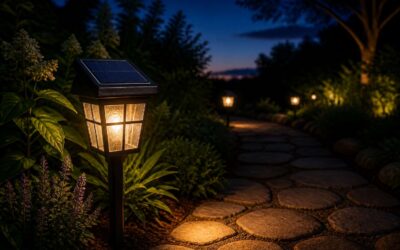
Pretoria’s highveld evenings drop fast, and the darkness can catch garden paths off guard. Solar lights pretoria turn those paths into functional lanes without need for trenches or electricians. For homeowners, this means softly lit borders along indigenous beds. For businesses, it means safe movement across parking lots and entrance routes.
Where solar lights shine most is in edge placements. Along a driveway, they outline curves, allowing vehicles to navigate. In a courtyard, they highlight benches and stepping stones. For business parks, lights mounted on low bollards direct foot traffic between buildings.
Outdoor solar lighting also emphasizes architectural features like stone walls or tree trunks. The effect is practical security because well-lit yards discourage intruders. Narrow beam angles suit pathways, while wider spreads work better for gardens.
The result is a Pretoria property that feels larger after sunset, with usable space extending beyond the front door.
Security and Motion Sensor Lights
Nightfall in Pretoria arrives with purpose. Darkness fills the spaces between buildings, and vulnerabilities surface. Solar lights pretoria address this directly, especially those fitted with motion sensors. They stay dormant until movement interrupts the gloom, then respond with sudden clarity. I have watched this happen; a sensor light catches movement mid-step, and the advantage is immediate.
A sensor light above a garage door catches a person before they reach the handle. A bollard along a commercial fence line exposes movement in shadows. For businesses with delivery zones, the light activates only when a vehicle approaches, saving energy.
- Garage and carport entrances
- Rear alleyways and service passages
- Loading docks and stock rooms
- External doors and fire escapes
The sensor does the watching, the solar panel does the charging. Solar lights pretoria give homes and businesses visibility on demand. In a city where darkness falls fast, that advantage matters.
Street and Communal Area Lighting
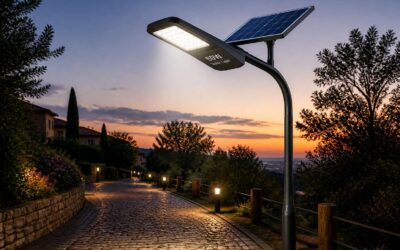
Street lighting in Pretoria’s older suburbs often skips the narrow lanes between properties. Municipal infrastructure is expensive, and some communal spaces remain unlit for years. Solar lights pretoria fill that gap without trenching or cabling. Residents’ associations install them along boundary walls and shared driveways. A single unit with a dusk-to-dawn sensor can cover a walkway that has been dark for decades.
Communal areas benefit from the same approach. Parking courts, park entrances, and taxi drop-off points stay visible without pulling from the grid. Consider these applications:
- Boundary fences that border public pavements
- Shared parking areas behind security complexes
- Pedestrian crossings on collector roads
- Municipal parks and open spaces
Each location demands different specifications. A park needs wider beam angles, while a narrow passage needs focused output. Solar lights pretoria adapt because the fixtures are modular. Panels tilt, sensors adjust, and brightness settings change with local conditions. The result is a practical way to keep communal spaces functional after sunset.
Commercial and Industrial Installations
A warehouse yard that once vanished into the Highveld night now holds its perimeter with steady, amber light. For commercial and industrial sites, solar lights pretoria change the cost equation. Grid connections to remote storage areas or new production halls often exceed the price of the fixtures themselves, but solar arrives as a self-contained unit mounted on poles or walls.
These applications go beyond simple pathways. Solar lights pretoria adapt to diverse needs: perimeter fencing for expansive sites, loading bays that operate before sunrise, equipment storage compounds, security checkpoints, and illuminated signage.
The magic lies in their autonomy. A business installs the system and it simply begins working, converting each day’s sunlight into night-time security. No trenching, no municipal plans, no waiting. That is the shift worth watching.
Installation and Maintenance Tips for Long-Lasting Performance
DIY Installation Best Practices
Installing solar lights Pretoria residents choose themselves is straightforward, but placement dictates performance. Mount fixtures where they receive unobstructed northern sun, and angle panels toward the equator. I have found that tightening all screws during assembly matters more than people expect; loose connections allow moisture ingress, which degrades internal circuitry over time.
For maintenance, wipe the photovoltaic surface every few weeks with a damp cloth. Dust accumulation in Pretoria’s dry months can reduce charging efficiency by a noticeable margin. Inspect seals and gaskets seasonally, replacing any that show cracking.
Consider these practices:
- Trim overhanging branches before winter shadows lengthen.
- Clear debris from sensor lenses to prevent false triggers.
- Store portable units indoors during severe hailstorms.
Battery replacement becomes necessary after two to three years. Use the same chemistry specified by the manufacturer. A small investment in upkeep keeps solar lights Pretoria homeowners select performing reliably through Highveld summers and winters.
Positioning for Maximum Sun Exposure
The sun’s arc changes dramatically between Pretoria’s summer and winter solstices. A panel basking in full glare during January may find itself shadowed by June. I have watched homeowners scratch their heads over dimming lights in winter, only to discover a neighbour’s new wall had stolen their sunshine. When people ask about solar lights Pretoria, I remind them that positioning is a year-round commitment.
Panels should face north, but the tilt matters just as much. A steeper angle suits winter’s low sun, while a flatter position captures summer’s overhead rays. Many fixtures allow tilt adjustment; spending ten minutes with a spanner twice a year keeps solar lights Pretoria owners content through both seasons.
Reflective surfaces deserve attention too. Light bouncing off a pale wall can supplement direct sun, though glare may confuse motion sensors. Trees grow, and the canopy that shaded nothing in spring will demand respect by autumn.
Cleaning and Basic Upkeep
As the highveld wind deposits ochre dust on every exposed surface, solar lights pretoria can lose efficiency over weeks. A pane bright in March may dim by May without any failed component. The culprit is grime. I tell customers to devote five minutes per month to cleaning. Use a damp cloth, not abrasive cleaners, and wipe the photovoltaic surface slowly. Check for battery corrosion after rain. Tighten loose connections.
Basic upkeep matters more than diagnostics. Every three months, inspect sensor heads for spiderwebs. A blocked sensor triggers erratic behaviour. For solar lights pretoria installations, replace rechargeable batteries every two years. Keep fixtures free of paint splatter and bird droppings.
A simple checklist helps:
- Wipe panels with a soft, damp cloth
- Verify battery contacts are oxidation-free
- Clear debris around sensor lenses
- Check housing for swelling or leaks
A disciplined plan prevents surprises after sundown.
Battery Replacement and Troubleshooting Common Issues
Batteries remain the critical component in any solar light, and in Pretoria they tolerate peculiar strains. Heat accelerates chemical decay, while afternoon storms test their seals. For solar lights pretoria, I recommend replacing rechargeable units every two years, not when they fail. A battery that dims gradually may simply be signalling old age. Remove the housing with care, match the voltage rating exactly, and recycle the old cell. Do not mix partially charged batteries; replace the entire set at once!
Troubleshooting begins with observation. If a light flickers after rain, dry the contacts. If it refuses to switch on, test the panel by covering it. Frequent offenders include loose wiring and corroded terminals. A sensor overwhelmed by reflected light may cycle on and off; redirect the fixture slightly. Most problems dissolve with patience and a clean cloth.
Cost Analysis and Energy Savings
Initial Investment vs. Long-term Savings
A typical residential solar lighting setup in Pretoria might cost a few thousand rand upfront, but this figure often gives homeowners pause. That initial price tag overlooks the real financial picture, especially when you consider the city’s abundant sunshine. Your investment stops being a mere expense once you calculate the avoided electricity tariff increases, which Eskom has consistently raised year after year. The calculation is not about the price of the units themselves, but about the monthly draw on your municipal bill, which shrinks noticeably during the summer months when sunlight is most generous.
The true value reveals itself over the five to ten year lifespan of a quality system. The recurring costs of solar lights pretoria are minimal, limited to occasional battery replacements and cleaning supplies. Consider the difference in operational expenditure:
– Zero monthly electricity charges for outdoor lighting
– No cabling or trenching expenses for remote areas
– Reduced need for electrician callouts
– Battery replacement only every three to five years
This is where the economics become compelling. The money saved on your bond, or rather the money not sent to the utility provider each month, eventually surpasses the initial outlay. For a business in an industrial park in Silverton or a homeowner in Waterkloof, that surplus is real, tangible cash flow that stays in your pocket. You are effectively purchasing years of lighting at today’s rates, insulating yourself from future price hikes. That is a return on investment that a standard electrical system, with its perpetual metered consumption, simply cannot match.
Potential Rebates and Incentives in South Africa
South Africa’s 2023 solar tax credit lets homeowners claim 25% of new panel costs, capped at R15,000. That rebate alters the cost analysis for solar lights pretoria in a concrete way. The energy savings show up on your municipal bill each month, measured in kilowatt hours not drawn from a strained national grid.
- SARS rooftop solar tax credit for individuals
- Section 12B accelerated depreciation for business installations
- Select municipal rebates for residential solar adoption
Pretoria’s summer daylight stretches past eight hours most days. Every hour of sunlight converted into stored power is an hour the meter does not count. The rebate gets the project started, but the monthly savings carry it forward!
Environmental Impact and Carbon Footprint Reduction
Every kilowatt hour stored by solar lights pretoria is a kilowatt hour the municipal meter never counts. The 2023 SARS rebate, covering 25% of panel costs up to R15,000, shortens the payback period considerably. Once that threshold is crossed, the monthly savings become the real return!
That return extends beyond the bank account. Coal-fired generation carries a heavy carbon weight per unit. Each installation displaces that burden directly. Over a twenty year lifespan, the cumulative reduction is substantial, and it happens without any change in daily behaviour.
Future Trends in Solar Lighting Technology
Smart Solar Lights with IoT Connectivity
The next generation of solar lights pretoria will behave as a connected web, not separate lamps. For me, the most compelling trend is wireless telemetry. These units speak to each other and to you, reporting load percentages, panel health, and ambient thermal shifts.
Specifically, an IoT gateway can predict a battery falloff before an outage occurs. It reads weather patterns moving over the Magaliesberg and adjusts the charging curve. Why wait for dusk when a node can preempt the night?
The practical uses are direct:
– Automated fault alerts tied to your phone.
– Adaptive lumen output based on suburban foot traffic.
– Real time remote diagnostics for communal maintenance.
For anyone weighing a purchase in this metro, solar lights bring an intelligence layer that saves manual inspection entirely. The array orchestrates itself, leaving you with the beauty of light, not the math.
Advances in Battery and Panel Efficiency
A solar panel from five years ago and one rolling off the line today are different machines. The newer unit captures a wider slice of the spectrum, even when Highveld dust films the glass. That gain matters directly for solar lights pretoria, where winter days are short but intense. Panel efficiency has climbed past 23 percent in commercial cells, which means smaller surfaces can feed larger batteries.
Battery chemistry is moving away from standard lithium ion. Lithium iron phosphate, or LFP, tolerates the heat of a Pretoria summer without swelling or losing capacity as quickly. A single LFP cell can survive more than 3,000 charge cycles. For a street light running nightly, that translates to a decade of service before replacement.
The hardware is not just denser, it is smarter about its own limits. Charge controllers now manage voltage per cell, not per bank. They slow the draw when the evening load is heavy and the sun was weak. This prevents the deep discharges that used to kill batteries in two winters. Solar lights pretoria installed this year will likely outlast fixtures bought only three years ago, purely on better internals.
– New alloys in photovoltaic cells reduce electron loss at high temperatures.
– Nanostructured anodes in batteries allow faster absorption of afternoon sun.
– Passive cooling fins on battery enclosures cut thermal stress during October’s heat spikes.
The result is a product that runs longer on a cloudy day and recovers faster when the sun returns. For communal installations, the savings come from fewer truck rolls and less ladder time. The panels are not magic, but the math has changed. A fixture that once needed full sun for six hours to charge can now do the work in four. That is a practical shift for a suburb that loses sight of the sun by 5 p.m. in June.
Integration with Home Automation Systems
In Pretoria, the next shift is not the panel or the battery, but the conversation between the light and the house. Solar lights pretoria are beginning to speak the same language as your security system, your geyser timer, and your indoor lighting. A fixture can now receive a signal from a smart hub and dim itself when the lounge lights come on, or brighten when the gate opens.
This integration relies on open standards and local processing. The light makes decisions on its own, without waiting for a cloud server. That matters when the internet stutters during a thunderstorm. The system learns your patterns, but the data stays on your property.
- Geofencing triggers lights as you approach the driveway.
- Voice assistants adjust the porch light without a phone.
- Energy dashboards show each fixture’s draw in real time.
The result is a garden that responds, not a gadget that demands attention. For solar lights pretoria, this means the hardware you install today will fit into the home you build tomorrow.


0 Comments