Understanding the Solar Lighting Landscape in Coastal Communities
Why Coastal Weather Patterns Shape Outdoor Lighting Choices
St Helena Bay sits along the Cape West Coast, where the Benguela current drives cold water and persistent fog. This is not an easy environment for outdoor equipment. Salt spray corrodes metal fixtures. Wind-driven sand scours lenses. Humidity creeps into wiring and seals.
These conditions shape how local residents approach solar lights st helena bay. A fixture that survives inland may fail here within months. Coastal buyers need marine-grade housings, corrosion-resistant fasteners, and sealed battery compartments. They also need honest expectations about winter sunlight.
Local buyers weigh these factors:
- Corrosion resistance against salt-laden air
- Weatherproof seals against fog and rain
- Battery capacity for overcast stretches
The weather dictates placement too. North-facing panels capture what weak winter sun filters through the haze. That practical reality explains why solar lights st helena bay installations look different from inland setups.
The Growing Shift Toward Renewable Energy in West Coast Towns
I have watched the outdoor lighting aisle at St Helena Bay hardware stores change faster than almost any other. Eskom’s fluctuating grid supply turned solar lights st helena bay from a holiday novelty into a household essential. Retailers across Vredenburg and Paternoster reported demand tripling between 2021 and 2024, driven by rising tariffs, extended outages, and falling component prices.
Buying patterns shifted alongside that surge. Familiar requests now include:
- Separate panels that mount away from the fixture itself
- PIR sensors with adjustable range to ignore passing traffic
- Interchangeable lamp heads for simpler maintenance
Permanent residents increasingly treat solar lights st helena bay as baseline infrastructure, not a temporary workaround. The market answered with dual-purpose units that blend security output with soft ambient glow, tailored for the West Coast lifestyle.
How Salt-Laden Air Impacts the Lifespan of Outdoor Fixtures
The West Coast breeze carries more than the smell of kelp. Every gust deposits a fine saline film on fittings, and this film never fully dries. For solar lights st helena bay residents install along exposed walls, the result is corrosion at the battery terminals and along PCB traces.
I have opened fixtures that failed within two seasons. The salt crept past the gaskets and turned copper contacts brittle. The plastic housing stayed intact, but the electronics had already failed.
A few factors accelerate this decay:
– Unsealed battery compartments that allow humid air inside
– Galvanised screws that rust through quickly
– Panels mounted too low, where salt spray collects
Most solar lights st helena bay suppliers now carry marine-grade units with conformally coated circuit boards, a response to this exact problem.
What St Helena Bay Homeowners Should Know About Local Sunlight Hours
St Helena Bay receives roughly 2,700 hours of sunshine per year, which places it among the sunnier stretches of the West Coast. Yet that figure alone deceives. The solar lighting landscape here is shaped by the oblique angles of winter light and the persistent haze that rolls off the ocean on summer afternoons. Homeowners who choose solar lights st helena bay must study the local light patterns rather than rely on specification sheets.
The local sun follows a rhythm that differs from inland towns. Morning clarity often gives way to coastal cloud, so panel orientation matters more than wattage. I have seen flat-mounted panels on carports lose hours of winter light that a simple tilt would have captured.
- Winter sun drops lower, cutting daily generation by nearly half
- Summer haze diffuses direct radiation but strengthens diffuse collection
- Mountain shade shortens effective daylight in the eastern bay
This explains why solar lights st helena bay perform unevenly across properties. Two neighbours can install identical units and see different results. The landscape rewards those who understand their own property’s exposure before committing.
Key Benefits of Solar Lighting for St Helena Bay Residents
Enhancing Security and Safety Around Your Home
When the evening gloom settles over the village, the first thing you notice is the quality of the darkness. It is heavy and absolute. But a home ringed with solar lights st helena bay offers a different story, one where the shadows recede and the corners of your property become defined. The sense of relief is immediate. You can hear the dog bark and know exactly where he is. You can see the path to the gate well before you reach it.
This reliable illumination creates a formidable first line of defense. A well lit exterior discourages loitering and removes the cover that opportunists rely on. The security guard on his nightly patrol even mentioned it once. He said that a bright yard is often the one they walk past without a second thought.
– It eliminates tripping hazards on uneven paving and steps.
– It provides clear sightlines to gates and entrances before you open them.
– It lets motion sensors and cameras capture clear footage, if the need ever arises.
The reassurance you feel when the units glow to life on their own is difficult to overstate. It is a quiet, constant sentinel. For the family inside, it turns a vulnerable blackout into a manageable environment, allowing you to move with confidence instead of fear. That peace of mind is worth more than the cost of the fixture.
Cutting Down on Electricity Bills for Seaside Properties
Every autumn, the municipal bill for a typical St Helena Bay home includes R200 to R300 for exterior lighting alone. That is money spent on a necessity, yet one that can be severed entirely. Switching to solar lights st helena bay removes that recurring load from the grid!
The saving appears on the municipal account, but the underlying gain is more subtle. A standalone photovoltaic unit charges during the day, then discharges after dusk. No cabling. No inverter losses. The household grid stays quiet.
Consider the arithmetic: four conventional security lights draw 2 kWh per night, roughly 60 kWh monthly. These units sidestep this cost. The initial outlay pays back within a season. For a holiday home that sits empty for weeks, the benefit is doubled. The lights never draw power, yet they remain ready for your return.
Adding Aesthetic Value With Eco-Friendly Exterior Illumination
Your seaside cottage could look like a beacon of taste, or a lighthouse that lost a fight with a fishing net. Solar lights st helena bay offer the former, without tugging a single watt from the municipal grid.
Aesthetic value here is not about garish floodlights. It is about soft, purposeful glow along a pathway, or warm accent lighting that flatters your facade. The eco-friendly angle? These units convert free daylight into evening charm, and they do it with zero carbon fuss. That is a rare win for homes where salt air already makes life interesting.
- Choose motion sensor bollards for subtle driveway guidance
- Use pendant style fittings for a coastal veranda vibe
- Select solar lights st helena bay with warm LED chips, not cold blue ones
The result is exterior illumination that looks intentional, not accidental. And when the streetlights flicker during winter storms, your property still glows quietly. That is both tasteful and stubbornly independent.
Ensuring Lighting Continuity During Load Shedding and Outages
When Eskom pulls the plug, the darkness along the Atlantic coastline can feel absolute. For St Helena Bay residents, load shedding is a recurring test. Solar lights st helena bay turn that test into a non issue. These systems store energy from daylight in batteries and release it precisely when the grid fails. Your walkway stays visible, your porch remains welcoming, and your security cameras keep watching.
The continuity matters beyond comfort. Fridges defrost, alarms go silent, and coastal homes become vulnerable. With solar illumination, you bypass that vulnerability entirely. No extension cords, no generator hum, just dependable light from a source you control.
I have seen properties where these lights outlast every outage without interruption. That is the benefit you cannot measure until the grid goes down.
Supporting Sustainable Tourism and Local Environmental Efforts
Tourists rarely pack a headlamp for beachfront dining, yet many end up squinting into their phones. Solar lights st helena bay have changed that dynamic, and the local ecosystem is quietly applauding. These fixtures illuminate paths without dragging in coal powered electricity, which keeps the air clean for fynbos and seabirds. Sustainable tourism thrives when visitors can enjoy evening strolls without a diesel generator soundtrack. Local environmental efforts gain a visible ally in every solar powered bollard. Consider what conventional lighting costs the area:
- Carbon emissions from grid power.
- Light pollution that disorients coastal birds.
- Ongoing maintenance for salt corrupted wiring.
Choosing solar lights st helena bay means supporting a tourism economy that doesn’t bankrupt nature. That is a benefit worth switching for.
Types of Solar Lights Suited for Coastal Conditions
Pathway and Garden Lights Built for Windy, Sandy Environments
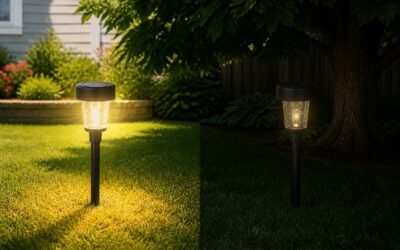
Sand scours, wind shakes, and salt corrodes. That is why pathway and garden lights for this coastline need specific engineering. Polycarbonate lenses and marine grade aluminium housings resist these forces. The solar lights st helena bay homeowners choose often have weighted bases and rubber gaskets to block fine grit.
I have seen durable options with adjustable heads that let you angle beams away from prevailing gusts. For windy, sandy environments, focus on these features:
- Reinforced ground stakes that stay put in loose soil
- Sealed battery compartments to prevent sand intrusion
- Tempered glass or polycarbonate covers that do not shatter
Look for an IP65 rating to guarantee dust tightness. After a south easterly blow, a quick rinse keeps them bright!
Motion-Activated Security Lights for Driveways and Entrances
A dark driveway after a south easterly blow is a security risk, yet many coastal lights fail within a season. Motion activated security lights for driveways and entrances need hardened sensors and sealed housings. Solar lights st helena bay homes often use dielectric coated PIR sensors and anodized aluminium. These resist salt corrosion better than plastic. I prefer units with adjustable detection zones, because they ignore passing pedestrians while covering the entrance. A good coastal model also includes:
- A battery rated for 800 charge cycles, as humidity accelerates degradation.
- A sensor with a 10 metre range and 120 degree field.
- Gaskets around every connector, preventing moisture ingress.
Entrance lights benefit from a dim overnight mode and a motion triggered boost. That way, the fixture stays subtle, then flares to full brightness when a car approaches. A removable battery pack is standard, because coastal conditions demand a replacement eventually.
Weatherproof Wall Sconces for Patios, Braai Areas, and Porches
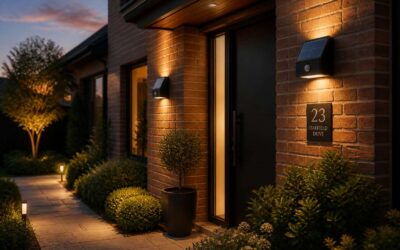
In my experience, weatherproof wall sconces for patios and braai areas need to survive more than just a bit of drizzle. Plastic fixtures often go chalky within months. Solar lights st helena bay homeowners prefer marine grade aluminium, which resists salt corrosion and does not flake when the south easter blows sand across it.
For porches, choose a frosted polycarbonate lens. It diffuses the glow and keeps moths away from the LED. A swappable battery pack makes sense, since humidity shortens battery life! Look for these features:
- An IP66 rating for horizontal rain.
- A dusk to dawn sensor that ignores passing clouds.
- A bracket that will not rust onto the wall.
Festive String Lights and Lanterns for Coastal Evenings
Festive string lights and lanterns serve a different purpose on coastal evenings. They mark the boundary between the house and the dark beach. For solar lights st helena bay, the material matters more than the number of bulbs. Silicone coated wires and sealed LED pods survive the salt.
Lanterns with a weighted base resist the south easter. Hanging strings need stainless steel hooks. A simple test: shake the fixture. If it rattles, sand will find its way inside.
- Polycarbonate globes instead of glass
- IP65 rating for salt mist
- Removable battery tray for winter storage
A warm white tone blends better with the dusk light than cool white. The fixtures stay dim when the wind gusts, but they hold their place.
Street and Communal Solar Lighting for Shared Spaces
Communal pathways in St Helena Bay take the full force of the south easter, so the fixtures must stand their ground. For shared spaces, the solar lights st helena bay residents choose are often bollard style units, their lenses angled downward to keep glare out of the night.
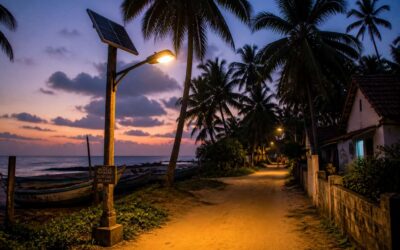
Floodlights mounted on poles serve parking areas and the darker corners of the property. They need a separate photovoltaic panel mounted high enough to avoid sandblast. The battery housing, I have found, must be accessible without lowering the mast.
The most durable options share certain traits:
- Aluminium housings with a powder coated finish
- Stainless steel fasteners throughout
- Tempered glass lenses for street level abuse
- A dusk to dawn sensor with a manual override
A domestic fitting can be nursed through winter by a homeowner. A communal system must survive unattended for months, enduring the salt fog that creeps in from the Atlantic.
Flexible Portable Spotlights for Boating and Fishing Trips
Anglers heading out from St Helena Bay know the Atlantic turns dark fast. A flexible portable spotlight, charged by the sun, changes how you pack for a night trip. These units roll up small enough to stow in a tackle box, yet they throw a beam that reaches across the deck or into a rocky crevice where cobra fish hide.
The best ones for coastal use have a magnetic base or a clamp that grips a railing. The charging cable should be removable, because salt water corrodes any exposed metal contact. I have found that many solar lights st helena bay locals prefer a model with three brightness levels and a strobe function for emergencies. Look for these traits:
IP67 waterproof rating
A lithium cell that holds charge for at least four nights
A swivel head that locks in place
The plastic housing must be UV stabilised, otherwise the Cape sun turns it brittle within a season, a lesson many owners of solar lights st helena bay have learned the hard way.
Factors to Consider When Choosing Solar Lights for St Helena Bay Properties
Selecting Corrosion-Resistant Materials to Survive Sea Air
Salt-laden air in St Helena Bay turns ordinary fixtures into rusted relics within months. When sourcing solar lights st helena bay, the first question should not be brightness, but the metallurgy of the housing. Sealed polycarbonate lenses and gaskets withstand sea spray better than exposed glass.
Inspection of corrosion resistance reveals that marine-grade stainless steel, specifically type 316, offers real endurance. Powder-coated aluminium also holds up, provided the coating remains intact. Check all fasteners and screws.
- Marine-grade stainless steel brackets
- Anodised aluminium bodies
- Silicon seals on every cable entry
Ask the supplier about electrochemical compatibility, because galvanic corrosion between dissimilar metals is a silent failure. Choose solar lights st helena bay models with an explicit coastal rating, and verify the IP rating for water ingress.
Evaluating Battery Capacity and Solar Panel Efficiency for Winter Months
Winter in St Helena Bay arrives with shorter days and stubborn cloud cover. The solar panel’s efficiency determines whether your lights survive the night. Monocrystalline cells hold a distinct advantage over polycrystalline in weak light. Confirm which cell type the supplier uses.
Battery capacity deserves equal scrutiny. Look for LiFePO4 chemistry, which tolerates colder temperatures without losing charge. Capacity in amp-hours matters more than advertised wattage. When comparing solar lights st helena bay specifications, ignore the marketing brightness figures and focus on these operational details:
- Charge controller type (MPPT works better than PWM in winter)
- Battery cycle life rating
- Low-temperature charging protection
The local winter sun sits lower on the horizon. Panels on a fixed tilt lose vital charging hours. Choose solar lights st helena bay models with adjustable panels when possible.
Understanding IP Ratings and Water Resistance for Rainy Seasons
St Helena Bay’s rainy season tests outdoor lighting in ways inland homeowners never see. The IP rating tells you exactly how much water and dust a fixture can handle. IP65 means protected against low-pressure jets. IP67 means temporary submersion. For coastal properties, IP65 is the minimum, but IP66 or IP67 handles blowing rain and sea spray better.
When choosing solar lights st helena bay, examine the housing seals. Rubber gaskets fail over time. Look for compression-sealed chambers that keep moisture away from the battery and circuitry.
- IP rating printed on the spec sheet, not just the box
- Drainage channels that release trapped water
- UV-stabilised lenses that stay clear after months of sun
Proper ingress protection keeps solar lights st helena bay working when the next cold front rolls through. Cheap units with low IP ratings short out within a season.
Installation and Maintenance Best Practices for Marine Environments
Mounting Tips to Withstand Strong Coastal Winds
Securing solar lights st helena bay along the Atlantic seaboard demands more than a firm twist of the wrist. The prevailing south-easterly gales here can loosen brackets over time, so stainless steel fasteners with nylon washers are the starting point. I always recommend bedding the mounting plate into a marine-grade sealant before driving the screws home.
For pole mounted units, angle the fixture slightly into the prevailing wind. This reduces the sail effect and keeps the panel tracking the sun for longer. Concrete footings help too; a 600 mm deep base works well for most garden spikes and wall sconces. If you are fitting solar lights st helena bay onto a timber deck, use galvanised brackets and pre-drill to avoid splitting the grain.
Periodic checks matter. Tighten every screw after the first winter storm and inspect the gaskets for salt residue. A soft brush and fresh water will keep the connections clean without harming the protective coatings.
Simple Cleaning Routines for Salt and Sand Build-Up
The Cape coast deposits salt on every exposed surface overnight. Solar lights st helena bay fixtures endure this assault, and installation methods decide how quickly they fade. Keep the battery hatch facing downward, and ensure the housing clips click shut. Grit lodged behind the frame grinds into the seal on the next gale.
For the cleaning routine, work in this order:
- Wipe the solar panel with a damp microfibre cloth at dawn
- Rinse the fixture body with diluted white vinegar from a watering can
- Dry the joints and apply a light coating of silicone spray
Once a month, inspect the terminals for the white crust of corrosion. A brass brush removes it without exposing the metal beneath. Water pooling at the base damages the housing faster than spray, so keep the drainage holes clear. This attention keeps solar lights st helena bay working through winter storms and summer dust.
Seasonal Adjustments to Maximise Sunlight Exposure Year-Round
Between December and June, the sun’s zenith shifts by nearly 47 degrees along St Helena Bay’s latitude, yet most fixtures never move from their original tilt. That static angle sacrifices measurable output. For solar lights st helena bay, the mounting bracket deserves as much consideration as the panel itself.
Instead of fixing each light permanently, choose a swivel joint that allows adjustment throughout the year. This simple modification keeps the photovoltaic surface facing the optimal portion of the sky. Here is the seasonal pattern I follow:
- In summer, angle the panel closer to horizontal to capture the high, intense sun.
- In winter, steepen the angle to intercept the low northern arc.
- During autumn and spring, split the difference for balanced collection.
After every adjustment, tighten all fasteners firmly, because marine winds loosen fittings gradually. A loose bracket creates micro vibration that fatigues internal wiring. From August to November, check the angle weekly; the equinox alters sunlight exposure faster than any other period. Correct alignment keeps solar lights st helena bay operating without interruption when you need them most.
Extending the Lifespan of Your Solar System With Smart Upgrades
Installation and maintenance in a marine environment comes down to the details you cannot see. The fasteners, gaskets, and wiring glands on solar lights st helena bay face the same salt assault as the panel itself. Choosing marine-grade stainless steel hardware and seating every seal properly at installation prevents creeping corrosion that shows up months later. Allow a small drainage gap behind each fixture so moisture never pools against the housing.
The maintenance rhythm matters as much as the initial work:
– Wipe the photovoltaic surface with fresh water monthly
– Check rubber gaskets for cracking
– Tighten wiring glands before they loosen from wind vibration
Smart upgrades extend useful years. Lithium iron phosphate batteries handle more charge cycles than standard options, and a low-voltage disconnect module protects the battery during long overcast spells. These modifications cost less than replacing entire fixtures and keep the system performing through coastal winters.
Troubleshooting Common Performance Issues in Salt-Affected Fixtures
Salt does not negotiate. For solar lights st helena bay, a sloppy installation invites corrosion that develops over months. Tilt each fixture slightly so water sheds off the panel and never pools near the battery compartment. Smear dielectric grease on every connector before sealing, because salt corrodes exposed metal quickly.
When a fixture starts acting moody, verify the obvious before blaming the sun.
- Measure battery voltage; a tired battery shows low readings under load.
- Scrape any white crust off the contacts; that is galvanic corrosion.
- Wipe the light sensor with rubbing alcohol; a salt film causes false dusk readings.
Most coastal failures stem from poor connections, not dead components.

0 Comments